Hope you all enjoyed our homage to the Harvard Sensory Ethnography Lab! Today we’ll head over to UT Connewitz again and continue with two début feature films that impressed us very much, when we stumbled upon it back then:
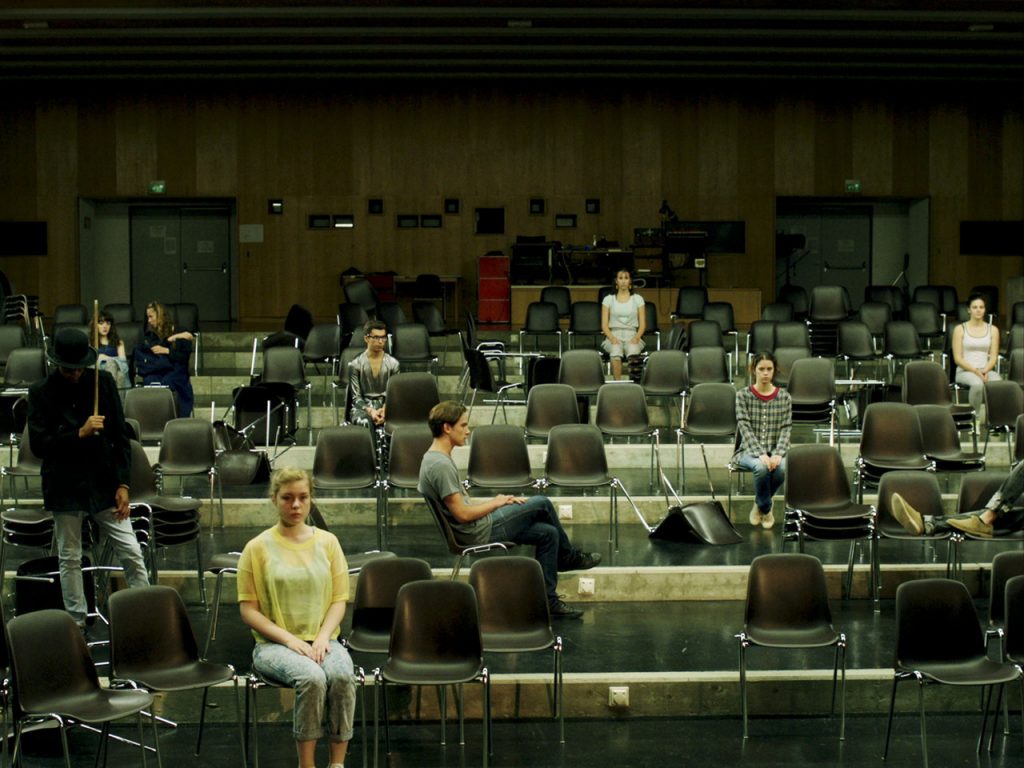
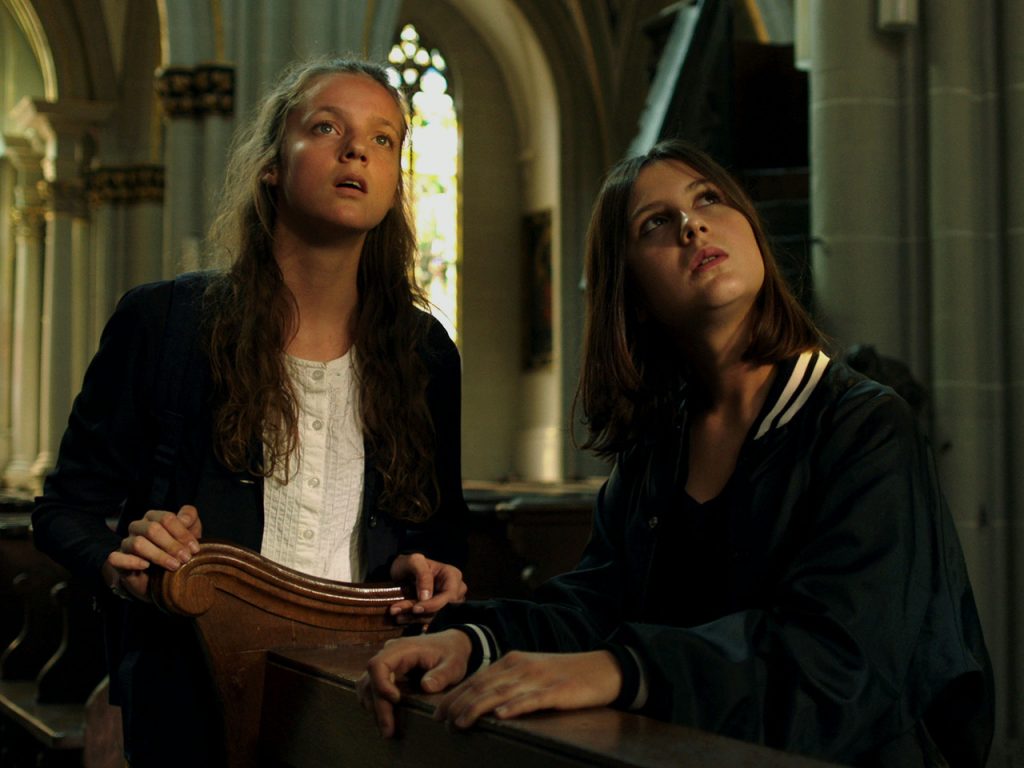
At 8pm there’ll be the Leipzig premiere of teenage drama SARAH JOUE UN LOUP-GAROU and we’re happy to have director Katharina Wyss coming to the screening to present her film and offer a Q&A.
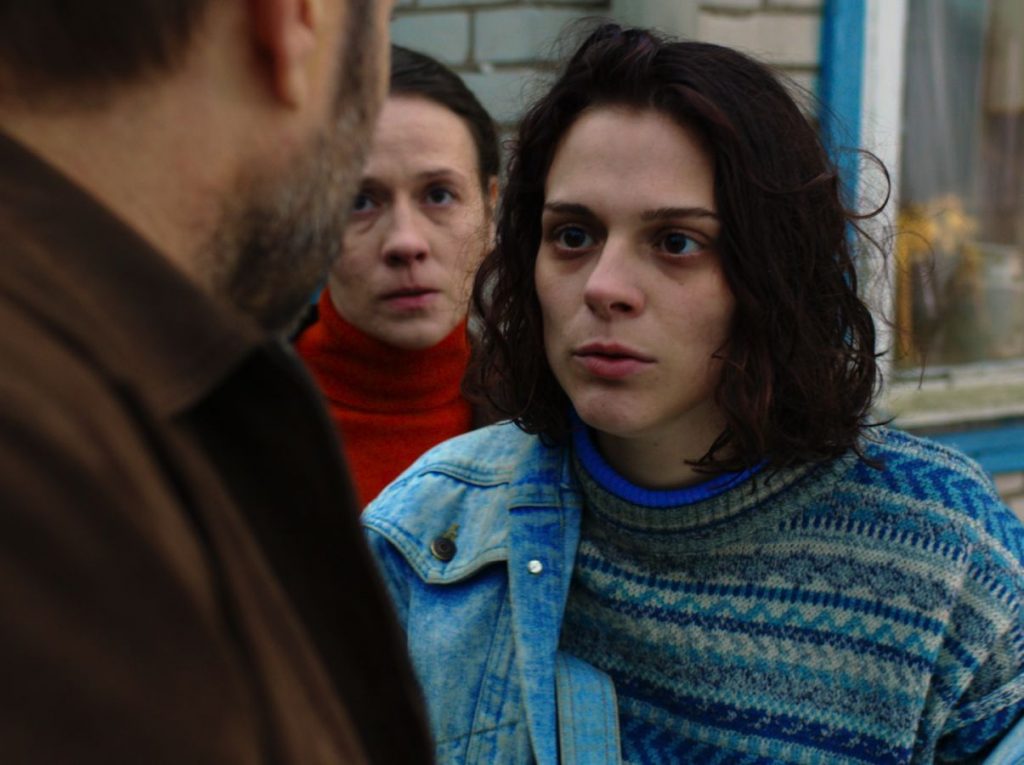
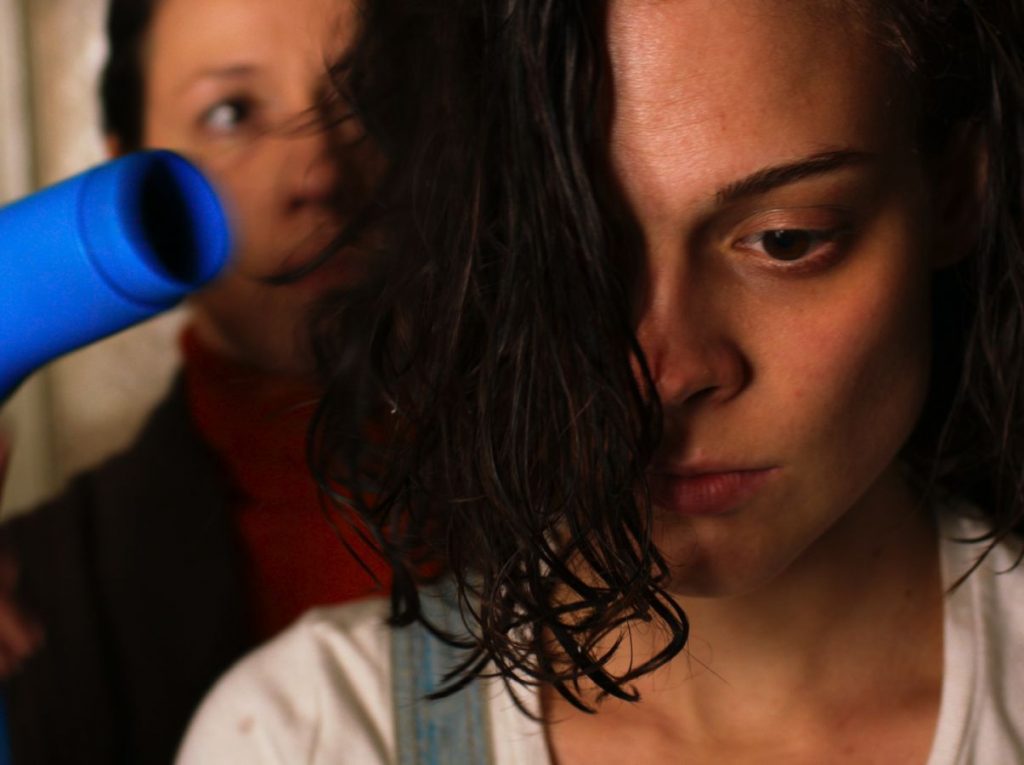
And at 10pm we’ll show TESNOTA by Alexander Sokurov’s student Kantemir Balagov about a Jewish-Russian community during the dawn of the Second Chechen War. Unfortunately, Balagov can’t make it to the screening today, but still it’s very much worth it to come and watch. Read more about the films below.
| Mon 09 April 2018 UT Connewitz | |
| 8 PM | Sarah Joue Un Loup-Garou (D/CH 2017) D: Katharina Wyss 86’ OV w/ English subtitles |
| 10 PM | Tesnota / Closeness (RUS 2017) D: Kantemir Balagov 118’ OV w/ English subtitles |
following Q&A with director Katharina Wyss.
SARAH JOUE UN LOUP-GAROU
CH, D 2017, 86’, OmeU, DCP, director: Katharina Wyss, actors: Loane Balthasar, Michel Voïta, Manuela Biedermann
By the end of puberty everything is actually already over, the die is cast: the most intense experiences have been made and life now is only obligatory sequel and epilogue. After the discovery of one’s own will, there is a phase of coming to terms with the pathways which life – by chance or intentionally – is now limited to. Relationships to others constitute and preserve themselves only according to already familiar structures. Admittedly, in this kind of life, art constitutes a place for more sublime emotion and experience, but after all, as one has to admit, it stays uncoupled from one’s own life. Katharina Wyss’ debut feature SARAH PLAYS A WEREWOLF depicts such an adolecent end-time scenario. Wyss’ film is a probe into the life of a seventeen-year-old schoolgirl from a Swiss small-town. In close-ups as well as distant shots, Wyss is investigating the increasing processes of alienation and becoming-other of theatre disciple Sarah – the growing distance to her parents and siblings, the diffuseness of her sexual impulses, her teenage solipsism. In search for her own desires, Sarah departs from almost everything but herself. However, in some sequences, there seem to be exits from all the entanglements and the inexorableness of growing-up. Sarah seems to find ways of how to precisely deal with these processes. Ways where she can break away and does not have to be Sarah anymore. An atmospheric GEGEN-coming-of-age film.
After the screening, there will be a Q&A with director Katharina Wyss.
TESNOTA / CLOSENESS
RU 2017, 118’, OmeU, DCP, director: Kantemir Balagov, actors: Darya Zhovner, Olga Dragunova, Artem Tsypin, Nazir Zhukov
1998, Nalchik, north Caucasus region. 24-year old tomboyish Ilana helps out in her father’s auto repair shop. She declines the role of the good daughter like her parents want her to be. Additionally, her status as an outsider is reinforced by the fact that she has a Kabadian boyfriend, who is not part of the Jewish community, in which her family moves about. Shortly after the wedding of her brother, the newly-wed couple is kidnapped. At that time, this was not a solitary case, says director Balakov. He grew up in Nalchik, then studied under Alexandr Sokurov, who co-produced this impressive debut feature. The script is based on first-hand experiences and stories carried together from the region. TESNOTA explores community and family dynamics, exposes trauma by its physical storytelling, all the while in wonderful images, glowing blue and yellow. The stylised realism of the film, in which just outside the current frame the next topic is always waiting, is continuously carried further by the question: how much are people willing to sacrifice themselves in order to save loved ones?
Dear friends of GEGENkino, today’s already the last day of our homage to the Harvard Sensory Ethnography Lab. Big thanks to everyone that same and has been involved so far! To close our homage we have this very special feature today at Luru Kino: at 6pm you’ll get the chance to hear two sound works of Ernst Karel. Sonic cinema! (If you need some context, here’s an interesting interview with Karel at Pitchfork.)
At 8pm, we’ll have a screening of the film CANIBA by Véréna Paravel and Lucien Castaing-Taylor that has been screening at documenta 14 last year as “Commensal“ as some of you might remember. There’ll be a discussion about the filmafter the screening as it’s quite hard to chew on. Read more about it below.
| Sun 08 April 2018 Luru Kino | HOMMAGE: Sensory Ethnography Lab |
| 6 PM | Sound Works – Ernst Karel MORNING AND OTHER TIMES USA 2014, R: Ernst Karel, Audio, 30’ SWISS MOUNTAIN TRANSPORT SYSTEMS, RADIO EDIT USA 2011, R: Ernst Karel, Audio, 55’ |
| 8 PM | CANIBA (F 2017) OV w/ English subtitles D: Véréna Paravel & Lucien Castaing-Taylor 90’ |
SOUND WORKS – Ernst Karel
MORNING AND OTHER TIMES
USA 2014, R: Ernst Karel, Audio, 30’
SWISS MOUNTAIN TRANSPORT SYSTEMS, RADIO EDIT
USA 2011, R: Ernst Karel, Audio, 55’
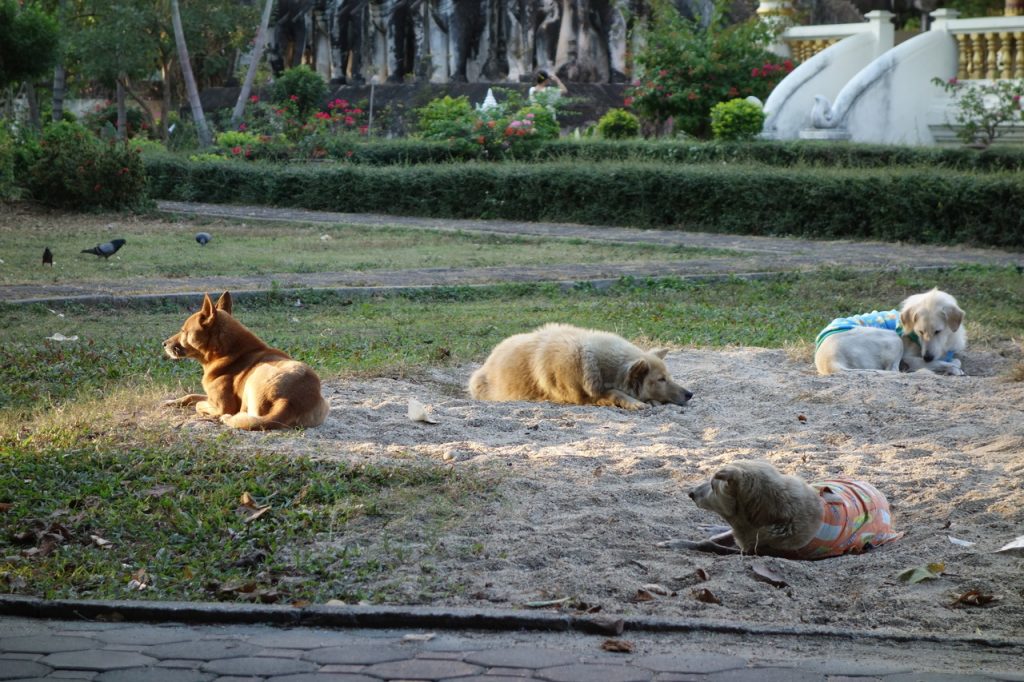
The cinematic cosmos of SEL with its visually sensitive documentary methods, emphasizing haptics and body perception, aims at broaden-ing the possibilities of scientifi c and aesthetic approaches to cultural and ethnographic phe-nomena, enabling new perspectives on the world of objects surrounding us. Unusual ways are also taken, when these visual experiences are exclud-ed. Even on a pure auditory level, the works go other routs: In his distinct sound experiments, Ernst Karel, sound specialist of numerous SEL fi lms, explores multi-layered soundscapes. The results are socially aware and aesthetic entities, ranging from a factual fi xation of the portrayed place’s social character to an artistic composition that stands for itself in an enigmatic way. For MORNING AND OTHER TIMES, Karel col-lected tonal impressions in Chiang Mai, Thailand, over a period of several weeks. A kaleidoscope of natural and urban, animal and human sound-scapes: on the one hand we have dogs barking, roosters crowing, crickets chirruping, and snatch-es of dialogue that remain unintelligible, clatter-ing engine noise and hymn-like chanting on the other. Then, the peculiar poetry of mechanical rhythms: in SWISS MOUNTAIN TRANSPORT SYSTEM, the Swiss alpine landscape forms the background against which cableways and chair-lift rides interlock with the fl eeting environment passing by. Again, the realms of man and nature, technological reproduction and autonomous art-work are intertwined.
CANIBA
F 2017 DOK, R: Véréna Paravel & Lucien Castaing-Taylor, 90’, DCP, OmeU
CANIBA hat das GEGENkino-Team gespalten, sowohl mit der Darstellung des Inhalts als auch mit der Art der Ankündigung solch eines Inhalts – deswegen zwei sich ergänzende Texte und eine Diskussion nach dem Screening.
I
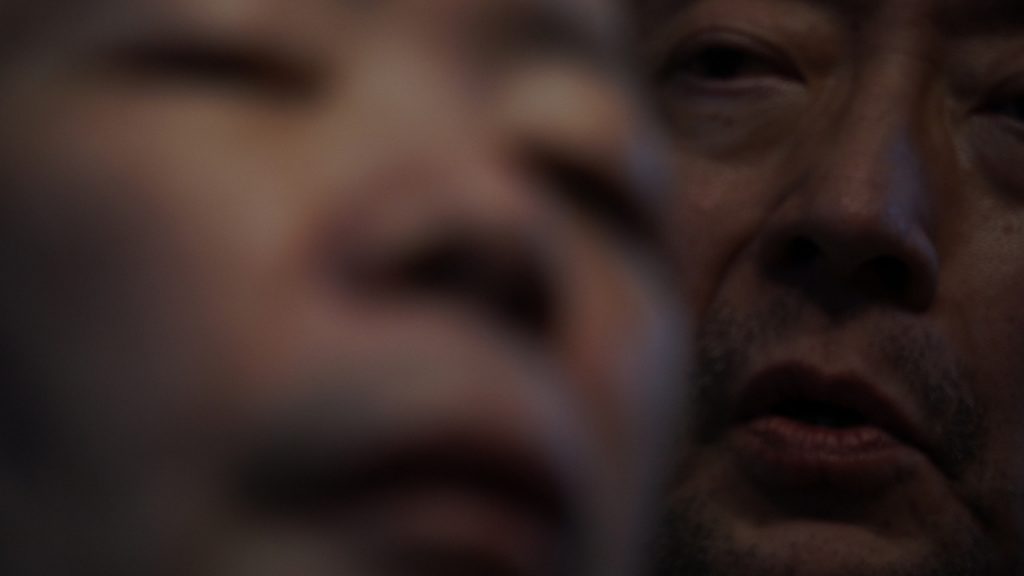
Ein Porträt der Nähe und Unnahbarkeit: Die Kamera fokussiert das Gesicht eines Mannes, tastend registriert sie jede Pore seiner verletzlich anmutenden Haut. Dann verliert sie wieder ihren Fokus, gleitet in Unschärfe ab. Der schemenhafte Hintergrund tritt nach vorn, das Gesicht hingegen zerrinnt zur unbestimmbar diffusen Masse – so wie es, wir werden es im lange währenden Interview erfahren, im Inneren dieses Menschen seine Entsprechung findet. Seine dumpfen Gedanken sind dominiert von Körperlichkeit und der Sehnsucht nach dieser. Auf eine Weise allerdings, die ihn von der Gesellschaft ausschließen muss. Issei Sagawa beging in den 1980er-Jahren in Paris einen Mord an einer Kommilitonin, die er anschließend, seinen kannibalistischen Sexualtrieb erstmals in die Tat umsetzend, in Teilen aß. Später wurde er in sein Heimatland Japan überstellt, wo seither sein Bruder mit ihm abseits der Außenwelt ein kärgliches Haus bewohnt. Jun Sagawa, bei dem ebenfalls körperliche Gewalt mit Lustgewinn einhergeht, scheint die einzige Person zu sein, die ihm zuhört und im Alltag unterstützt. Doch wechselt das Geschwisterverhältnis ständig zwischen Fürsorge und Abgestoßensein, zwischen Empathie und Nicht-Begreifen-Können. CANIBA reflektiert diese Diskrepanz: Wie kann man sich überhaupt der Psyche und ihrer Untiefen filmisch nähern?
II
In CANIBA porträtieren Véréna Paravel & Lucien Castaing-Taylor den zeitweise zur Kultfigur avancierten Mörder und Kannibalen Issei Sagawa und seinen Bruder Jun. Während sie sprechen, schleicht über weite Teile des Films die Kamera in extremen Close-Ups und mit wechselnder Schärfe die Gesichter und Körper der beiden entlang. Dabei enthält sich der Film einer moralisierenden Position und eröffnet dadurch einen schwer auszuhaltenden Raum der Ambivalenz, in dem die Brüder ihre misogynen Fantasien und (auto)aggressiven Fetische mitunter zelebrieren können. Das Regie-Duo vollzieht ein sinnlich-immersives Beschreiten der Ränder menschlicher Abgründe und keine Analyse der problematischen Verschränkung von gesellschaftlicher Faszination, Personenkult und medialer Vermarktung. Die Einflechtung von Werken der Pop- und Un-derground-Kultur – ein pornografisches Fragment mit Teilen eines Re-Enactments, ein verstörend-expliziter Comic Sagawas, der Song „La Folie“ der New-Wave-Band The Stranglers – dient hier dem Versuch einer alternativen, betont atmosphärischen Annäherung. Nach etlichen Skandalen, reißerischen Reportagen und makabren Kochshow-Auftritten rund um den „Celebrity Kannibalen“, interessiert sich CANIBA vielmehr für Formen von Begreifen und Grenzen von Bildwerdung. Ein kontroverses Stück Film, dessen Blick nicht didaktische, sondern suggestive Qualitäten hat.
We’ll continue our homage to the Sensory Ethnography Lab
Today at Luru Kino. Thanks to all y’all who came around yesterday and thanks to UT Connewitz and Prof. Dr. Ursula Rao. Today we’ll have Simon Rothöhler of Germany’s unbeatenly best film magazine Cargo as a guest to give a lecture on the SEL and introduce the first two films showing today: FOREIGN PARTS and SINGLE STREAM. Rothöhler also contributed a text to our special SEL booklet which you can find here: GEGENkino 2018 SEL booklet—or tonight at Luru Kino. Here’s the schedule and further information:
| Sat 07 April 2018 Luru Kino | HOMMAGE: Sensory Ethnography Lab |
| 8 PM | Foreign Parts + Single Stream FOREIGN PARTS (USA/F 2010) D: Véréna Paravel & J.P. Sniadecki 80’ & SINGLE STREAM (USA 2014) D: Pawel Wojtasik, Toby Kim Lee & Ernst Karel 23’ |
| 10 PM | J.P. Sniadecki | FOCUS ON CHINA SONGHUA (USA/CHN 2007, DOK, R: J.P. Sniadecki, 28’, DCP, OmeU) YUMEN (USA/CHN 2013, DOK, R: Xu Ruotao, J.P. Sniadecki, Huang Xiang, 65’, DCP, OmeU THE YELLOW BANK (USA/CHN 2010, DOK, R: J.P. Sniadecki, 27’, DCP, OmeU, OV w/ English subtitles |
Lecture by Jun.-Prof. Dr. Simon Rothöhler
FOREIGN PARTS / SINGLE STREAM
FOREIGN PARTS
USA/F 2010 DOK, R: Vèrèna Paravel & J.P. Sniadecki, 80’, DCP, OmeU
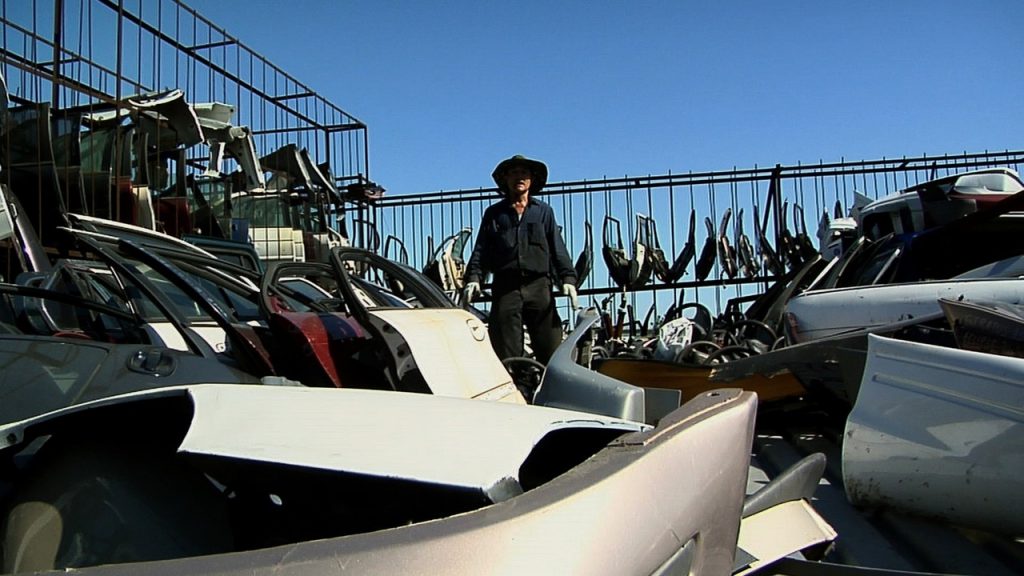
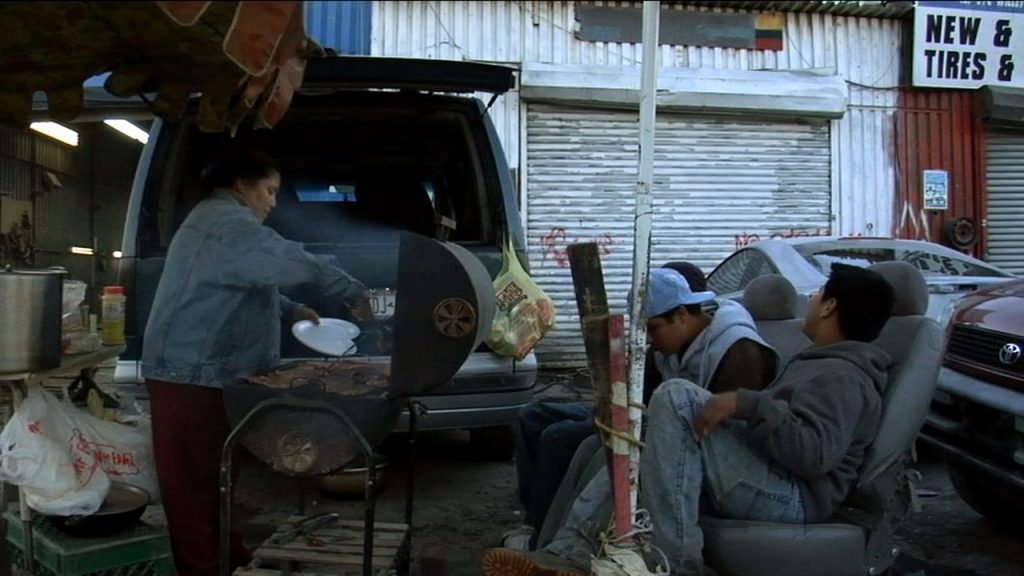
A junkyard and spares trade point in Queens, NYC: a vivid microcosm of a predominantly migrant and precarious metropolitan culture. Snatches of dialogue, personal as well as busi-ness, barbecues, Puerto Rican singing, social hardship, alcoholism and interpersonal solidarity. Vèrèna Paravel and J.P. Sniadecki who were about to shoot experimental masterpieces in the framework of SEL respectively, LEVIATHAN (2012) and YUMEN (2013), go along the old ways of cinéma vérité in FOREIGN PARTS. The camera is hardly after aesthetic composition but direct-ly follows the protagonists that are loosely por-trayed: when begging, getting spares or dancing at the garage now and then. The industrial zone “Willets Point” is under threat of demolition, and with it the existence of about 250 shops and more than 2000 jobs. Residential units, a convention center and the like are to supplant it according to ideas of the local municipality. A socio-politically charged fi lm that never forces a certain stance: it only illustrates.
SINGLE STREAM
USA 2014 DOK, Paweł Wojtasik, Toby Kim Lee & Ernst Karel, 23’, DCP, OmeU
SINGLE STREAM hovers stronger between the depiction of a specifi c everyday work life and a formally abstract aesthetic study: a waste separa-tion and recycling plant gives rise to an aesthetic confi guration of the ugly phenomena. Colours, forms and material surfaces ghostly cross cin-emascope shots, the sound effects are equally haunting and appalling.
J.P. Sniadecki | FOCUS ON CHINA
SONGHUA
USA/CHN 2007 DOK, D: J.P. Sniadecki, 28’, DCP, OmeU
YUMEN
USA/CHN 2013 DOK D: Xu Ruotao, J.P. Sniadecki, Huang Xiang, 65’, DCP, OmeU
THE YELLOW BANK
USA/CHN 2010 DOK, D: J.P. Sniadecki, 27’, DCP, OmeU
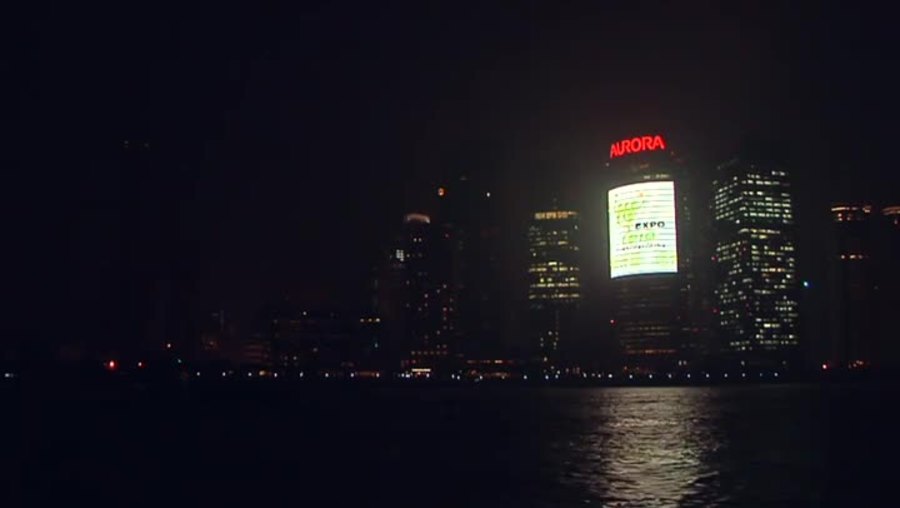
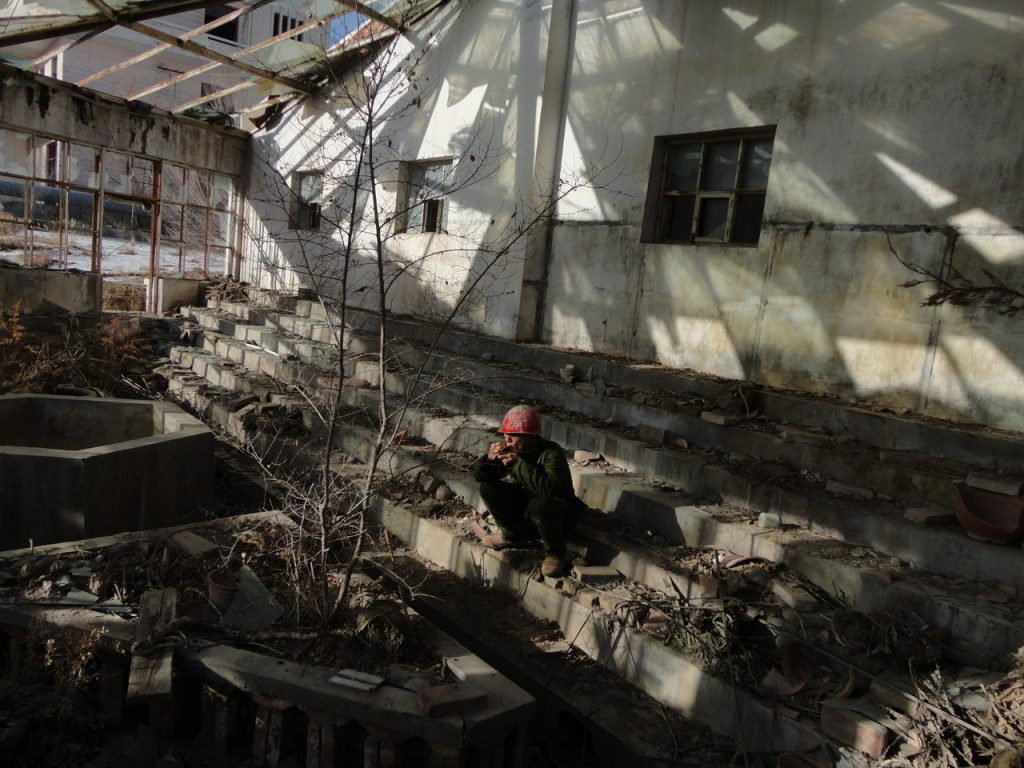
With its focus on the interrelationship of man and nature, concretely the meaning of the river Son-ghua for the approximately four million inhab-itants of Harbin, SONGHUA most likely stands in the tradition of ethnographical documentary. Loosely and ephemerally, tourism, leisure activ-ities, rendezvous and trivial daily tasks, but also the severe water contamination, are registered. A river is also the central focus of THE YELLOW BANK. The static camera is stationed on a ferry and registers the impressive skyline of Shanghai while slowly shipping along on a rainy morning. Subject and its formal composition are conceiva-bly straightforward. But then, something extraor-dinary happens: gradually, a natural phenom-enon shades the metropolitan scenario until it reaches complete darkness.While nature was controlling the proceedings for a short amount of time in THE YELLOW BANK, in YUMEN however, it is about nature’s exploitation. Yumen, a once vivid industrial city, is located in the Northwest of China. In the past, it used to be an important oil production spot, nowadays it is an abandoned and ruinous ghost town. The narrowly framed 16mm images which exhibit their fragile materiality and impermanence themselves, equal-ly capture the shabby interior of previous factories and representative buildings as well as individual people moving ghostly through these.
Thanks a lot, you dear adherents, for coming to our opening screening at Luru Kino yesterday! It was a pleasure to see so many new as well as familiar faces.
Today we’ll continue at UT Connewitz with our three-day homage to Harvard’s Sensory Ethnography Lab that will encompass 10 films and 2 audio works. To introduce you to the works of the SEL and give some context we’re very happy to have Prof. Dr. Ursula Rao from Leipzig Institue of Anthropology coming for a talk about ethnographic film.
There’s also a small booklet designed by Sophia Eisenhut including texts by Cargo’s Simon Rothöhler and our homeboy Tilman Schumacher about the SEL and the films and works we’ll present as part of our homage. You can find it right here: https://view.publitas.com/gegenkino/sel-2018
And now here’s the schedule for today:
| Fri 06 April 2018 UT Connewitz | HOMMAGE: Sensory Ethnography Lab |
| 8 PM | SWEETGRASS (USA 2009, 35mm!) D: Ilisa Barabash & Lucien Castaing-Taylor 101’ OV w/ German subtitles |
| 10 PM | STEPHANIE SPRAY | FOCUS ON NEPAL Untitled (2010, Dok, R: Stephanie Spray, 14min, OmeU, DCP) As long as there’s breath (2009, Dok, R: Stephanie Spray, 56min, OmeU, DCP) Monsoon Reflections (2008, Dok, R: Stephanie Spray, 23min, OmeU, DCP) OV w/ English subtitles |
Einführung von Ethnologin Ursula Rao
SWEETGRASS
USA 2009 DOK, 101’, OmdU, 35mm
Directors: Ilisa Barbash & Lucien Castaing-Taylor
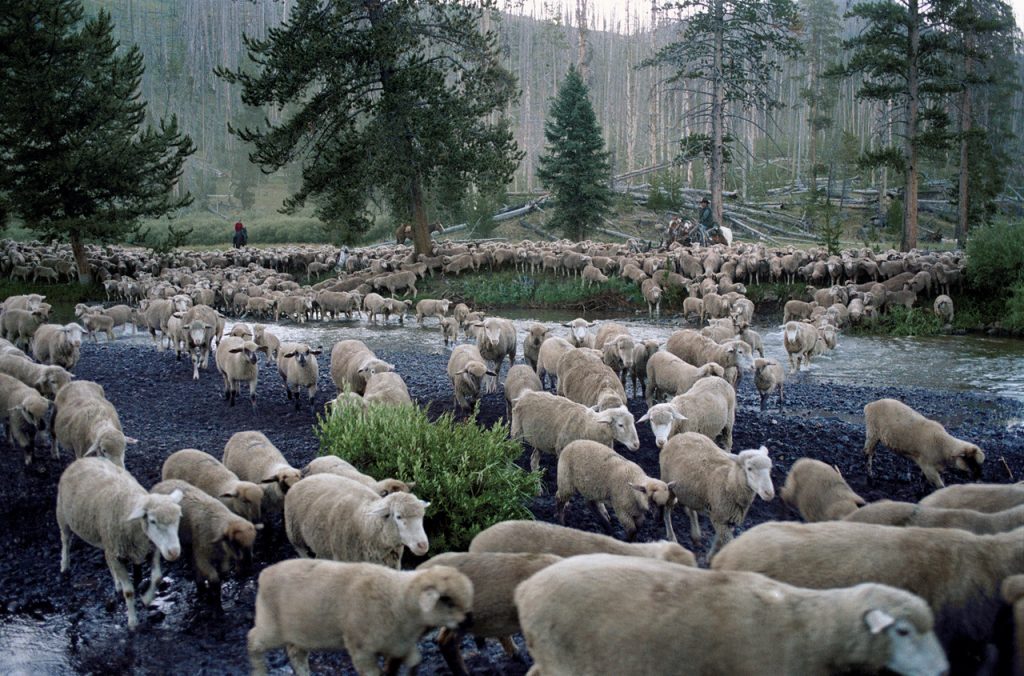
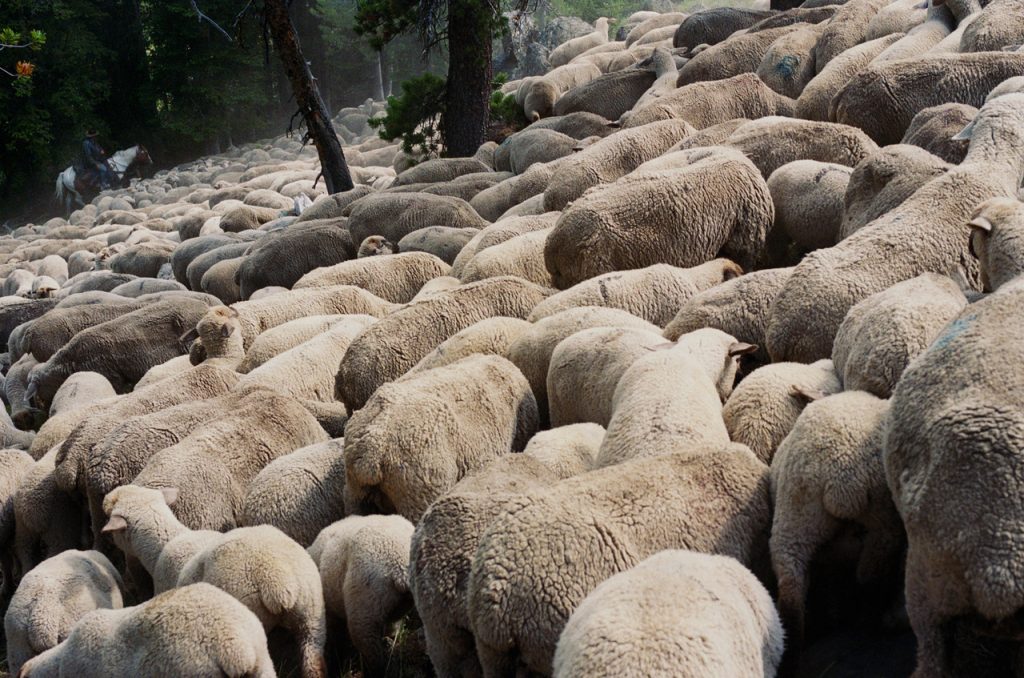
Eine experimentelle Annäherung ans „Americana“. Gegen Ende des Films sieht man in einer Kamera-Totalen, die von einem Berg aus ins Tal gerichtet ist, eine Schafherde, wie sie sich langsam eine Steigung hinaufschlängelt, angetrieben von einem Schäferhund und dem dazugehörigen Cowboy. Er ist über die weite Distanz hin nur schemenhaft auszumachen, doch die Tonspur ist uns ganz nah: “Fucking sick of this shit! Move on you fucking whores!” Das ist der skurril wirkende Höhepunkt der Entzauberung und -mystifizierung des sagenumwobenen Cowboy-Images, der für SWEETGRASS in Gänze stehen kann. Der klassische Cowboy, leidenschaftlich und eins mit der Natur, ist hier, ebenso wie Naturromantik, kaum noch anzutreffen. Zwar sehen wir uns majestätische Landschaften gegenüber, die bergige und mit satten Weideflächen bewachsene Umgebung Montanas, doch steht der harte und vor allem einsame Arbeitsalltag der porträtierten Viehtreiber im Vordergrund. Sie ziehen abhängig vom Zyklus der Jahreszeiten ihre Schafe zum Weiden vom Tal in die Berge, anschließend wieder hinab – ein monotoner Vorgang und für die Sweetgrass-Region von Montana der letzte seiner Art. Lucien Castaing-Taylor und Ilisa Barbash dokumentieren damit auch ein aussterbendes Handwerk, eine symbolisch besetzte Kulturtechnik Amerikas seit dem 19. Jahrhundert. Bemerkenswert frei von Sentimentalität und doch mit etwas Wehmut.
Die Ethnologin Ursula Rao wird in einer Einführung die Verortung des SEL innerhalb der (visuellen) Ethnographie in wissenschaftsgeschichtlicher und- theoretischer Hinsicht beleuchten
Kurzfilme von Stephanie Spray
FOCUS ON NEPAL
Untitled
2010, Dok, D: Stephanie Spray, 14min, OmeU, DCP)
As long as there‘s breath
2009, Dok, D: Stephanie Spray, 56min, OmeU, DCP
Monsoon Reflections
2008, Dok, D: Stephanie Spray, 23min, OmeU, DCP
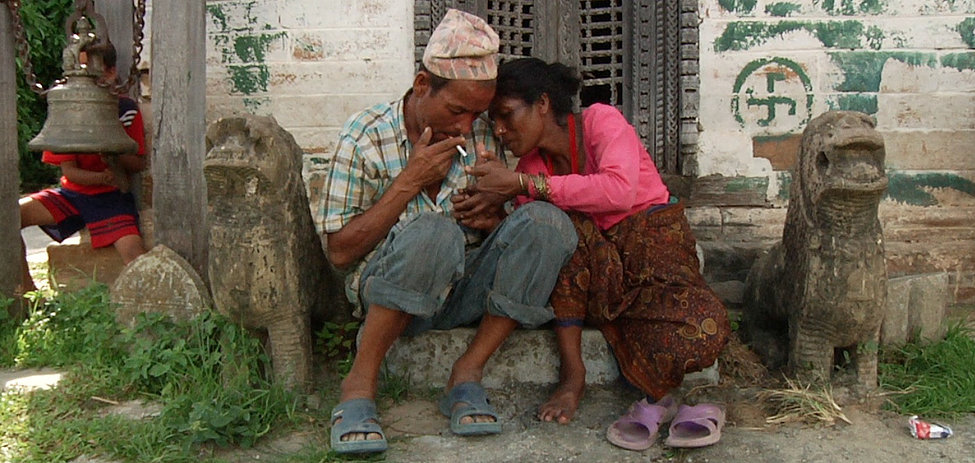
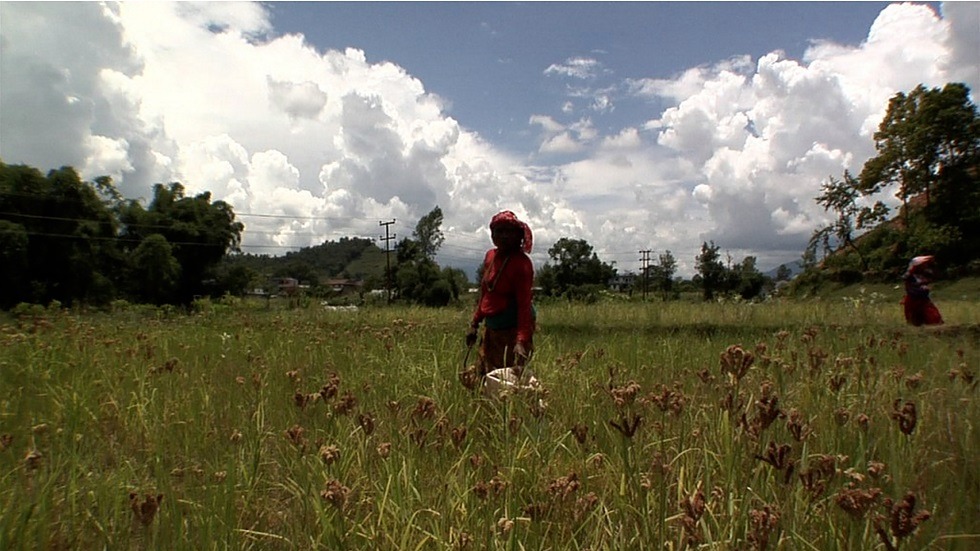
Die kontinuierliche, vierzehnminütige Einstellung in UNTITLED, in der ein frischvermähltes Paar miteinander streitet und dann wieder scherzt, nimmt auf kondensierte Weise Stephanie Sprays’ Betrachtunsweise des nepalesischen Familienzusammenhangs auf. Ruhig beobachtend, wenig an Ästhetisierung interessiert, dafür umso mehr am Geschlechterverhältnis.
„What kind of life is this for God to give me? (…) It seems it’s not okay to walk around crying.“, resümiert das weibliche Oberhaupt der nepalesischen Gayek-Familie, während sie, hochbetagt, in der Hocke einen Stein schleift. Mit einfachen Mitteln registriert MONSOON-REFLECTIONS den gemeinsamen (Arbeits-)Alltag der Familienangehörigen, die nur aus Frauen zu bestehen scheinen. Stoisch und zugleich humorvoll ertragen sie ihr beschwerliches, von körperlicher Arbeit geprägtes Leben.
AS LONG AS THERE’S BREATH handelt in zumeist statischen, lange währenden Einstellungen ebenfalls vom Zusammenhalt der Gayeks. Statt der Arbeit rückt hier mehr die emotionale Bindung der Protagonisten zueinander in den Blick. Fragen der Sexualität, Paarbeziehung und des gesellschaftlich bedingten Ungleichgewichts der Geschlechter kommen ungezwungen zur Sprache. Diesmal sind auch Männer präsent, einer davon aber nur in Gedanken: Kamal, der es im Dorf nicht mehr ausgehalten habe und sich einer maoistischen Jugendorganisation anschloss. Über solche nur aus dem Off vermittelten Nebenschauplätze, scheint über das enge Familiengeflecht hinaus ein Bild der nepalesischen Gegenwart hindurch.
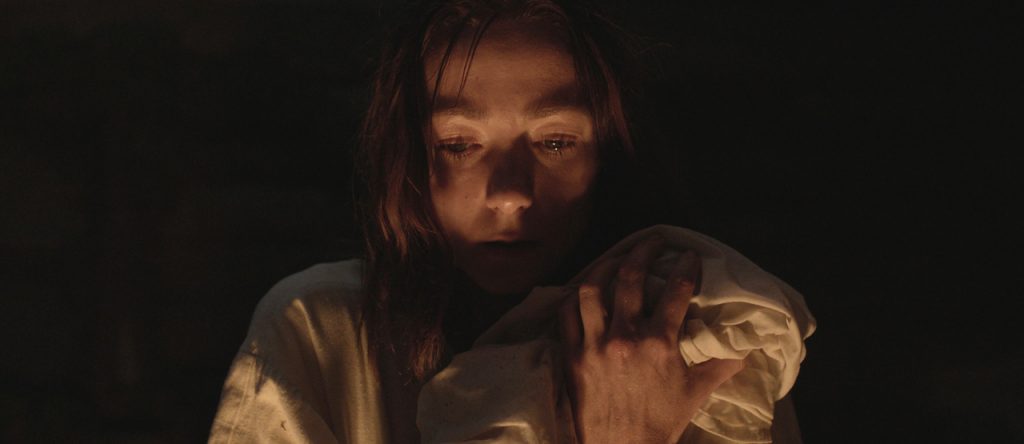
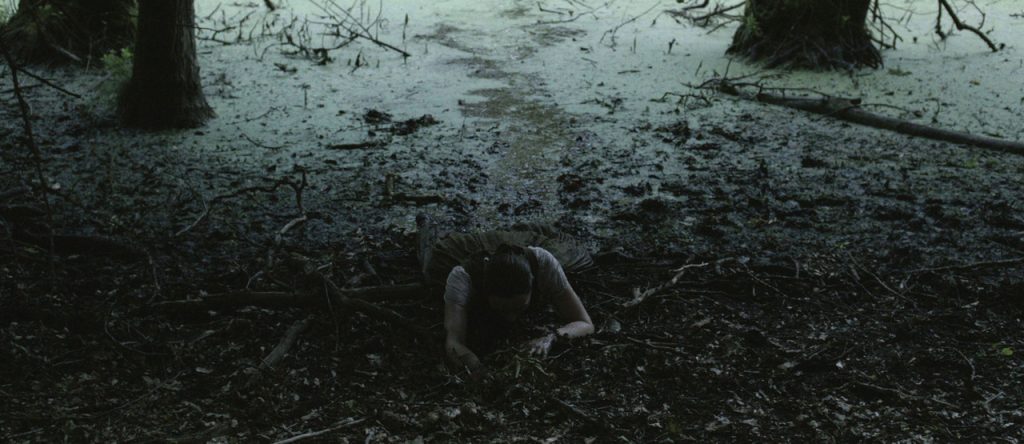
The clock’s ticking… GEGENkino 2018’s starting today at 9pm at Luru Kino in der Spinnerei with Lukas Feigelfeld’s massive witch hunt flick Hagazussa – proof that there’s still some great unseen German horror films.
| 05 April 2018 Luru Kino | OPENING FILM |
| 9 PM | HAGAZUSSA – A HEATHEN’S CURSED AT 2017, 102’, DCP, Director: Lukas Feigelfeld OmeU/OV with English subtitles |
HAGAZUSSA – A HEATHEN’S CURSED
AT 2017, 102’, DCP, Director: Lukas Feigelfeld, Actors: Aleksandra Cwen, Claudia Martini, Tanja Petrovsky, OmeU/OV with English subtitles
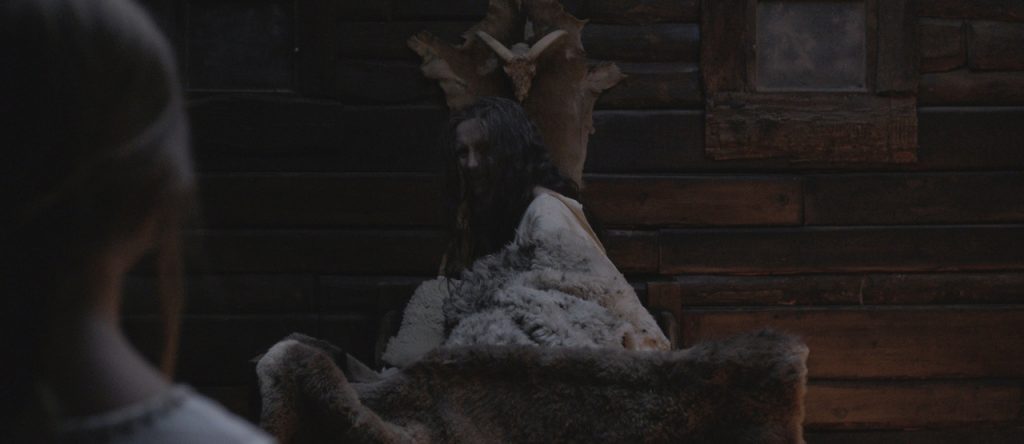
The young Albrun must witness how her mother is stigmatized as a witch and finally consumed by the plague in the medieval solitude of the Alps. Many years later, she still lives outside of the vil-lage, tends goats, cares about her newborn and avoids the company of the community. When a newly-acquired friendship turns bitter, Albrun gives free rein to her shadowy soul. Lukas Feigelfeld’s graduation film at the dffb is an atmospheric horrorfilm, an original piece of genre art that does not exhaust itself in the processing of standard situations. HAGAZUSSA in fact dares to step out of the overly secure terrain of the familiar, and hypnotically tells a story of loneliness and delusion, superstition and violence. In the face of the outcast, landscapes become apparent, shaped by privations and abominations. While the visual arrangements unclose an opulent expanse, the cello of the doomy drone soundtrack re-lentlessly creeps into the depths of subconscious. A film that tracks one, touches, erodes.