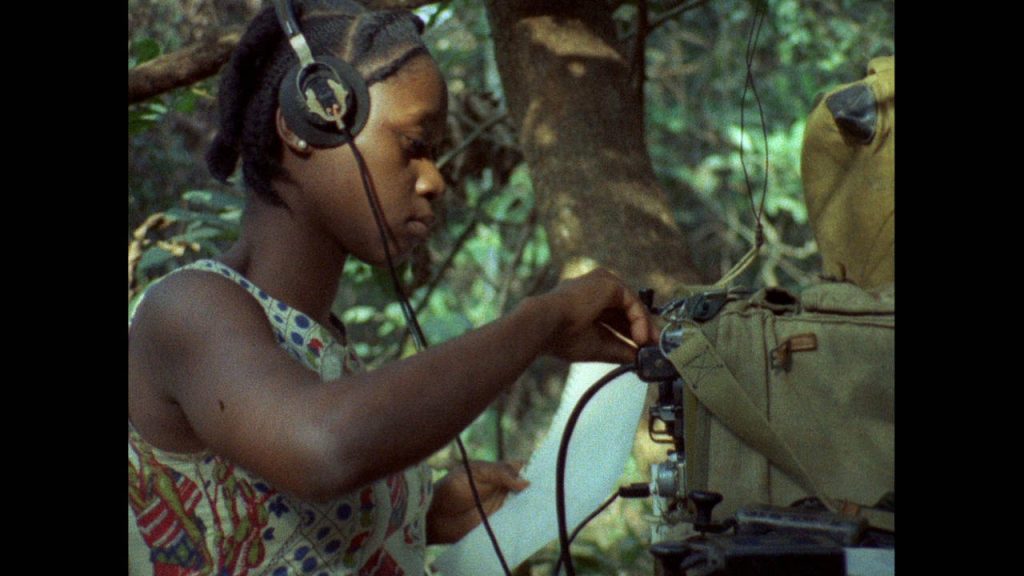
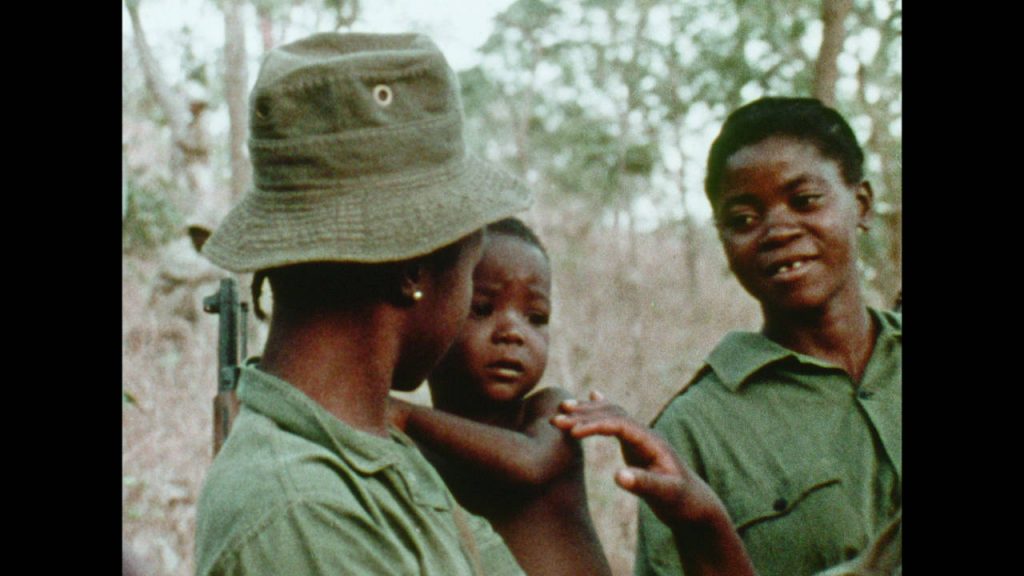
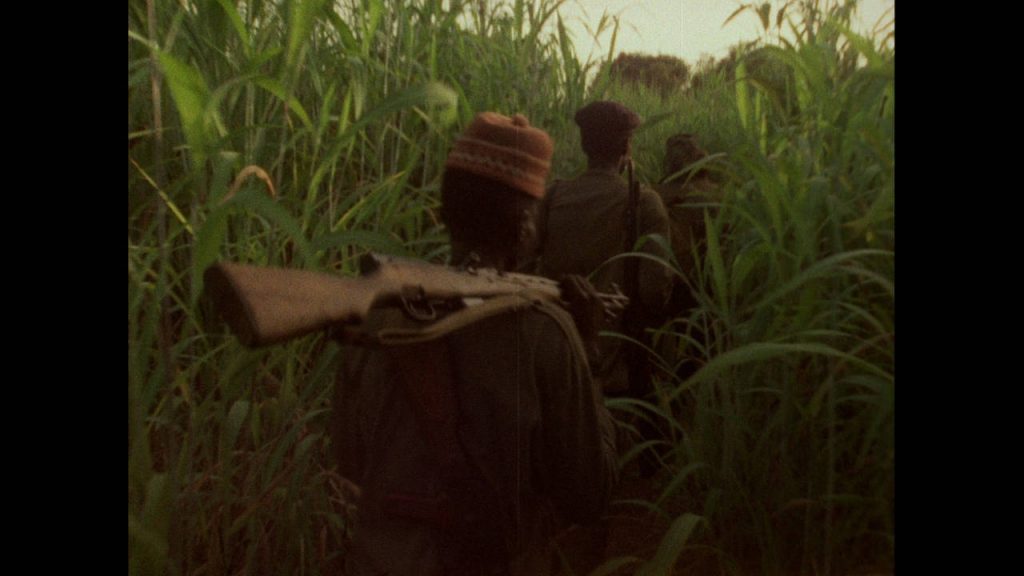
On Friday, 22 Apr, 7pm and in cooperation with the GRASSI Museum of Ethnography we will screen »Concerning Violence« by Göran Hugo Olsson, whom you may know as the director of »The Black Power Mixtape 1967-1975«. Even though this is not particularly African cinema, »Concerning Violence« is more than relevant with regard to the issues we want to address and discuss in the AFRICAN OUTLINES section. The film, which carries the subtitle »Nine Scenes from the Anti-Imperialistic Self-Defense« is, for one part, a filmic involvement with the ideas of one of the pioneers of postcolonialism—Frantz Fanon—, and as well a resurrection of concrete African history as director Olsson’s assembles found footage material from the archives of different African national independence movements.
Again, we are working together with AG Postkolonial Leipzig for this screening and Diana Ayeh & Natascha Bing will give an introduction and context to Olsson’s film.
Read more about the film and see the trailer below.
Concerning Violence – Nine Scenes from the Anti-Imperialistic Self-Defense
(Doc SE/FI/US/DK 2014, D: Göran Hugo Olsson, 85’, OV with German subtitles, BluRay)
With an introduction by Diana Ayeh & Natascha Bing (AG Postkolonial Leipzig)
In the light of Franz Fanon’s book “The Wretched of the Earth”, the film ConcerningViolence tells of the riots leading to the de-colonizing of Africa. New-found archive footage about the violent confrontation with colonial powers between 1966 and 1984 is combined with quotes from Fanon’s divisive text—a text that at the beginning of the 60s conceived a pan-African vision of a socialist revolution, which as a counterforce was to be directed against both colonial and imperialist oppression as well as against the new, “native” governments. Musician Lauryn Hill reads passages from the text that are displayed and that are structuring and commenting the film material. Images of the liberation movement in Angola, FRELIMO in Mozambique and the struggle for independence in Guinea-Bissau are contrasted with documentary pictures of Swedish missionaries in Tanzania and of a strike at a Swedish mine in Liberia. A look on current smouldering conflicts shows that even 50 years after Fanon’s death, the consequences of centuries-long European raids and interventions are far from being overcome along old colonial borders. (Film with a preface by Gayatri Spivak)
22 April,7pm – Grassi Museum – € 4/3(red.)
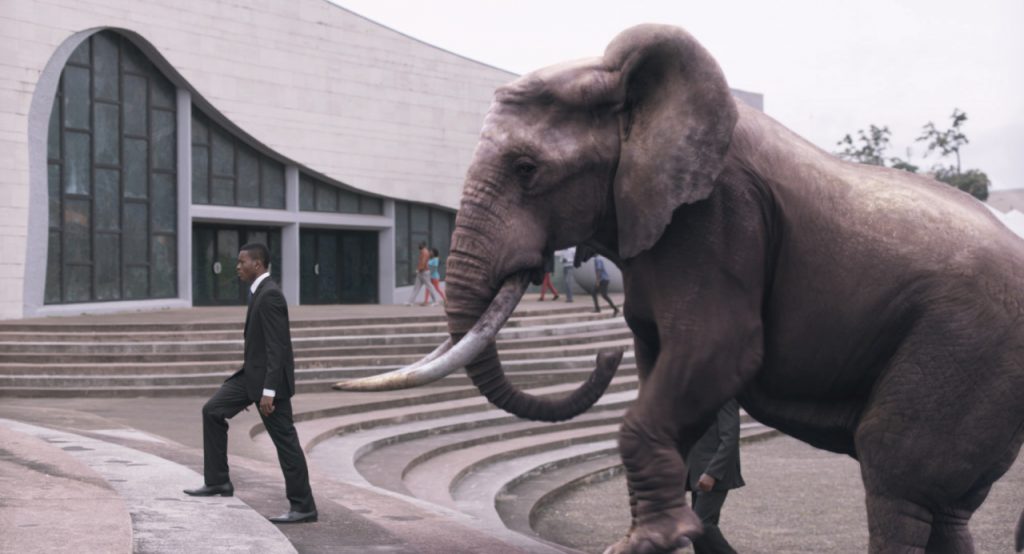
Africa is not a country.
Hence, at this year’s GEGENkino we want to show the great diversity of contemporary African cinema in our section AFRICAN OUTLINES.
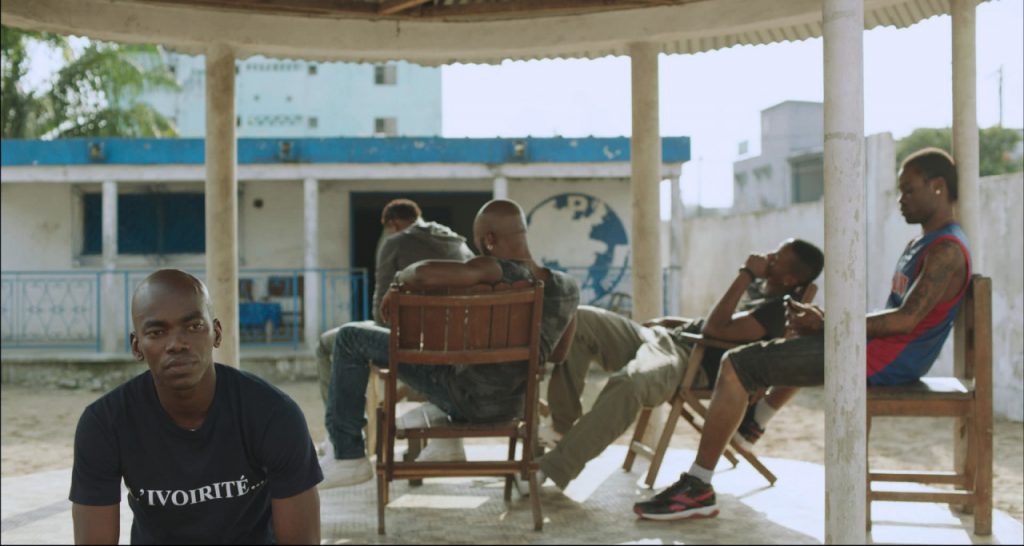
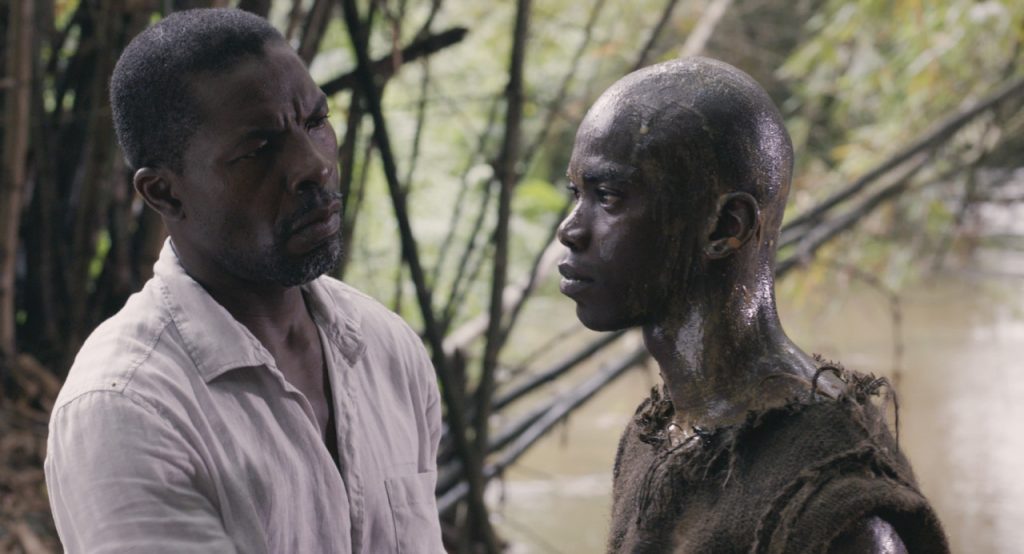
On Apr 26 we will screen the film »Run«—director Philippe Lacôte’s
unique take on the First Ivorian Civil War that took place in the years
from 2002 until 2007. Diana Ayeh & Natascha Bing of
AG
Postkolonial Leipzig
will give an introduction to the movie, give some insights into the
historical context and the postcolonial concerns of the film.
We’re looking forward!
Run
(CIV/F
2014,
D:
Philippe
Lacôte,
A:
Abdoul
Karim
Konaté,
Isaach
de
Bankolé,
Djinda
Kane,
OV
with
English
subtitles,
102’,
DCP)
with an introduction
by Diana
Ayeh & Natascha Bing (AG
Postkolonial Leipzig)
Somnambulistically, a young man walks towards the Prime Minister during church service and kills him, while all the others present are sitting on their places silently and disinterestedly. Afterwards, he escapes—from his pursuers, from himself, from his dreams, and memories. Initially, it remains unclear if this is also a run for freedom. Full of twists and turns like his eponymous protagonist’s escape, Run tells its story in front of the backdrop of the Ivory Coast’s civil war, whom 3,000 people fell victim to during the years 2002 to 2007. Director Philippe Lacôte merges narrative elements of African mythology and nature mysticism with the real context of the crisis. His masterful plot reveals the biography of a freedom fighter who wanted to be a rainmaker at first, then led the life of tramp being assistant to the fair curiosity and professional contest eater Gladys before finally hooking up with the patriotic youth and commencing underground combat.
26 April, 9 pm – Luru-Kino at the Spinnerei – € 6,5/5,5 (red.)
Only two weeks left until GEGENkino #3 starts—and now here’s for some very special announcement!
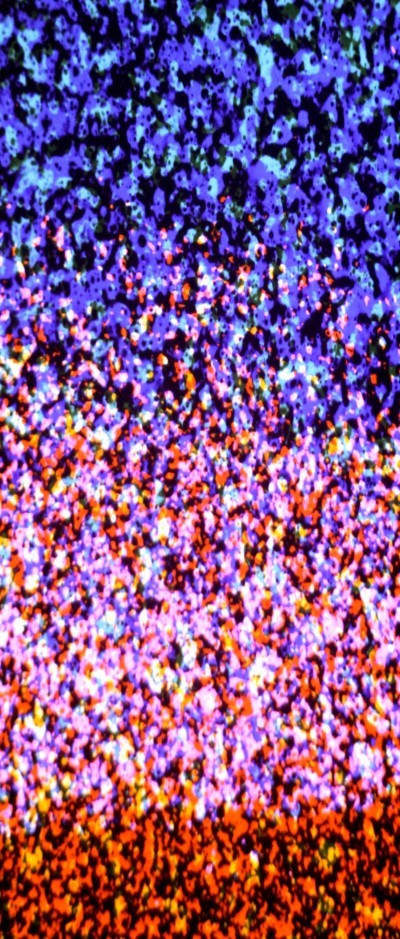
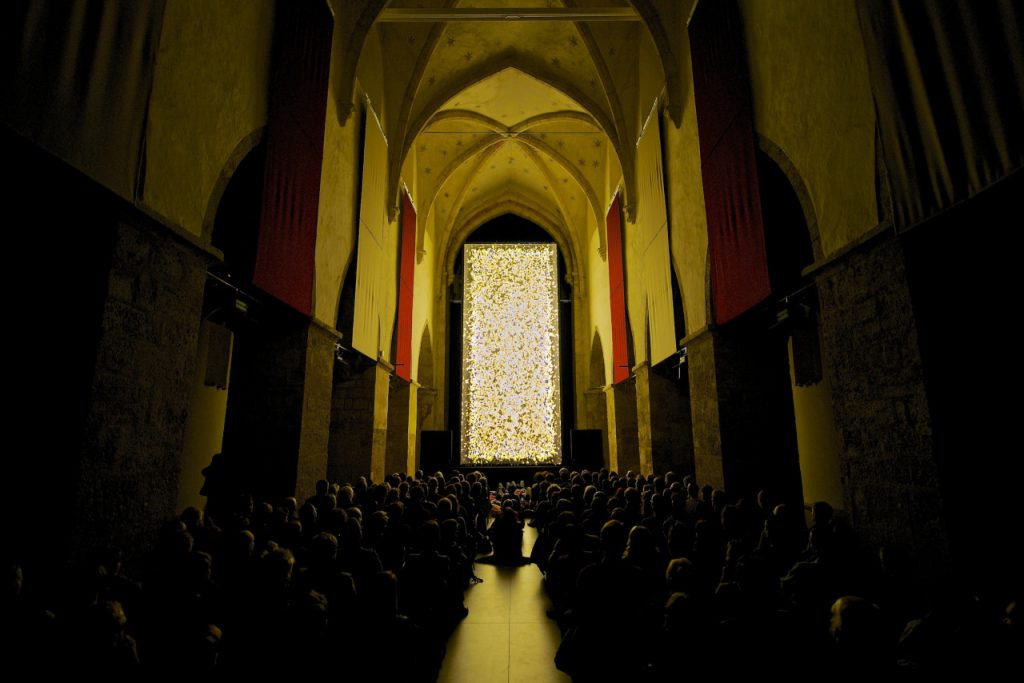
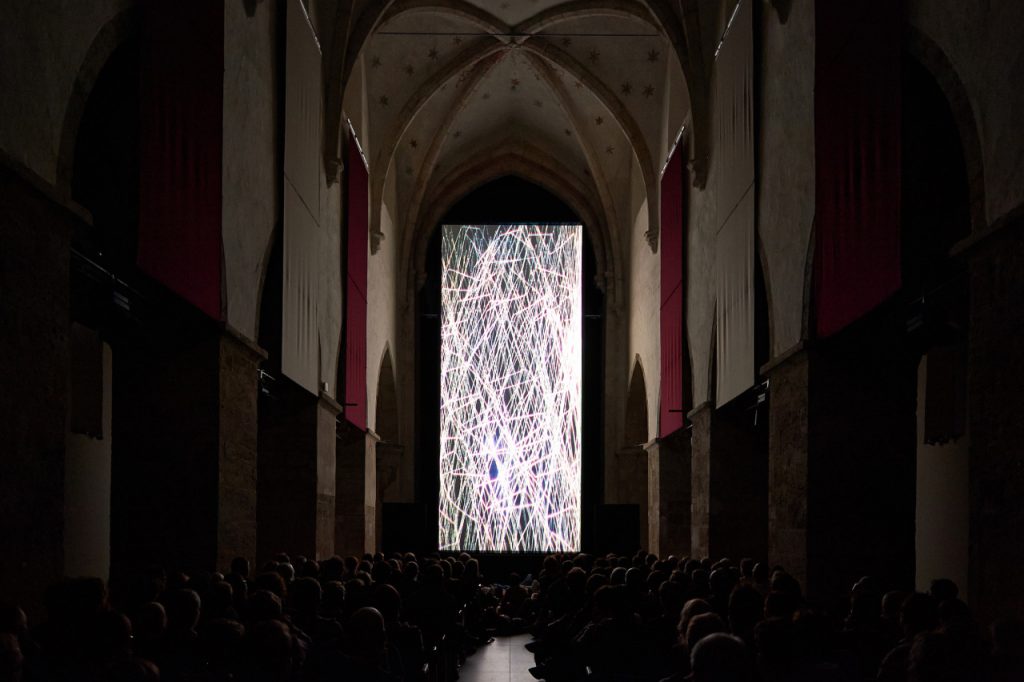
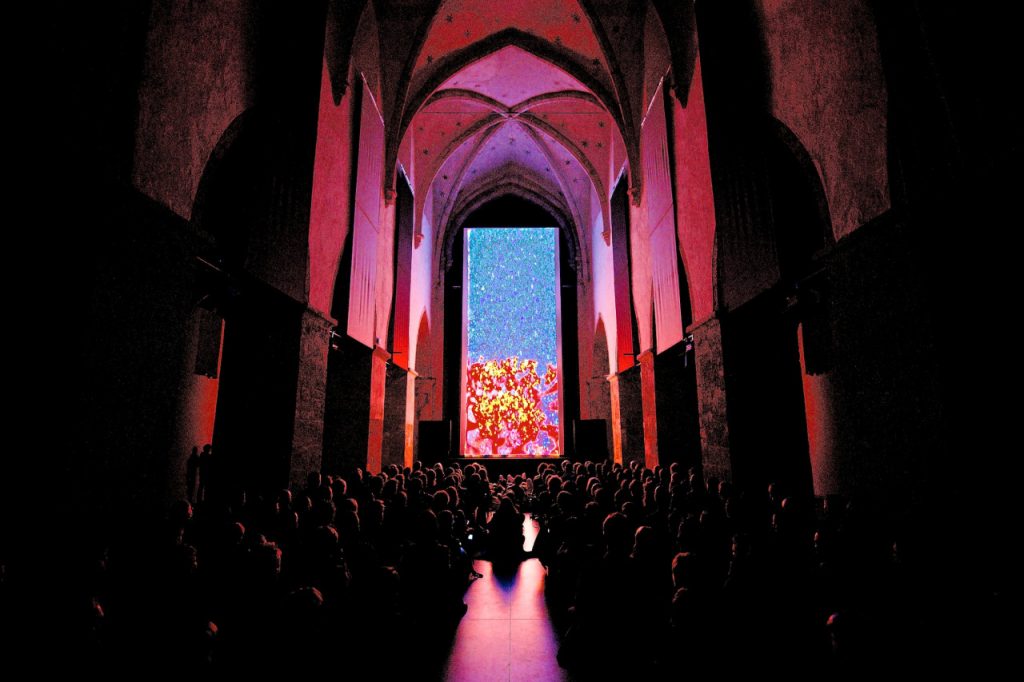
On Apr 28 the VERTICAL CINEMA project will come to Leipzig as part of GEGENkino festival and will turn the cinema screen towards the church dome. At the Paul-Gerhard-Church in Connewitz a 9x4m large vertical cinema screen will be installed and a special construction of 35mm projectors will screen a seldomly before-seen selection of experimental films by a variety of international film and video artists.
Vertical Cinema events have been taking place so far only at selected festivals and venues—most recently at the Baltā Nakts in Rīga last September—and this will be the first Vertical Cinema screening in Germany.
Read more about the project below.
Moreover, we announce that our ticket pre-sale starts tomorrow!
Tickets for the whole festival are 38/32 (red.) euros and will be available, as usual, at Filmgalerie Westend (Industriestraße 18) and in the Buchhandlung W. Otto & Nachf. (right next to the UT Connewitz). More information in the ticket FAQ.
See you soon,
your psyched up GEGENkino crew
Vertical Cinema [German Premiere]
(D: miscellaneous, without dialogue, 35mm)
Our look orientates itself upwards—from darkness towards light. VerticalCinema banishes traditional projection formats and rotates a cinemascope screen with its very wide dimensions through 90 degrees. As a result, the screen is twelve meters high, and together with custom-built 35mm projectors—tipped over through 90 degrees as well—a concert PA system and the Paul Gerhard Church’s nave provide a marvellously suitable setting in which a short film programme novelly gets to the bottom of accustomed film experiences, shifts it into vertical direction and thus creates an intensity that’s almost rising up to the sky. For the compilation being screened, ten groups of avant garde filmmakers, musicians and visual artists were commissioned to produce one film respectively. The works stand in several lines of tradition of abstract cinema: structural experiments, remixes of found footage, chemical explorations of the film material and laser action intriguingly move the cinematographic image onto a new axis.
Tina Frank (AT): Colterrain (10’)
Björn Kämmerer (GER/AT): Louver (10’)
Manuel Knapp (AT): V~ (9’)
Johann Lurf (AT): Pyramid Flare (5’)
Joost Rekveld (NL): #43 (10’)
Rosa Menkman (NL): Lunar Storm (4’)
Billy Roisz & Dieter Kovačič (AT): BRING ME THE HEAD OF HENRI CHRÉTIEN! (8’)
Makino Takashi (JP) & Telcosystems (NL): Deorbit (17’)
Esther Urlus (NL): Chrome (8’)
Martijn van Boven & Gert-Jan Prins (NL): Walzkörpersperre (11’)
Filmmaker Johann Lurf will give a lecture about the
Vertical Cinema project and will be available for a Q&A.
28 April, 9 pm – Paul-Gerhard-Church Connewitz
€ 8-15 (entrance fee suggestion)
In this year, too, we want to continue to examine the political
potential of cinema as well as its involvement in the formation of a
cultural memory, its representation of history and its function as a
vehicle for collective commemoration.
Accordingly, we’re really happy to have Prof. Dr. Marcus Stiglegger—film scholar and cultural scientist from Berlin – coming to our festival on Apr 24, 2016 and present his recent findings on cinematic representations of the Shoah.
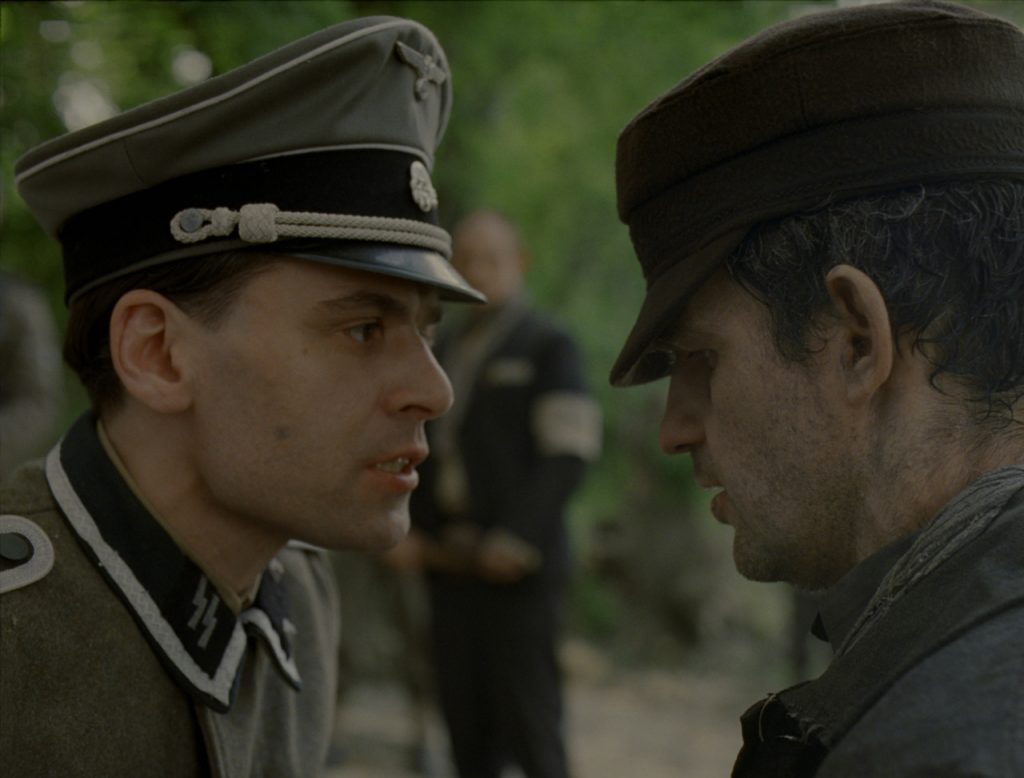
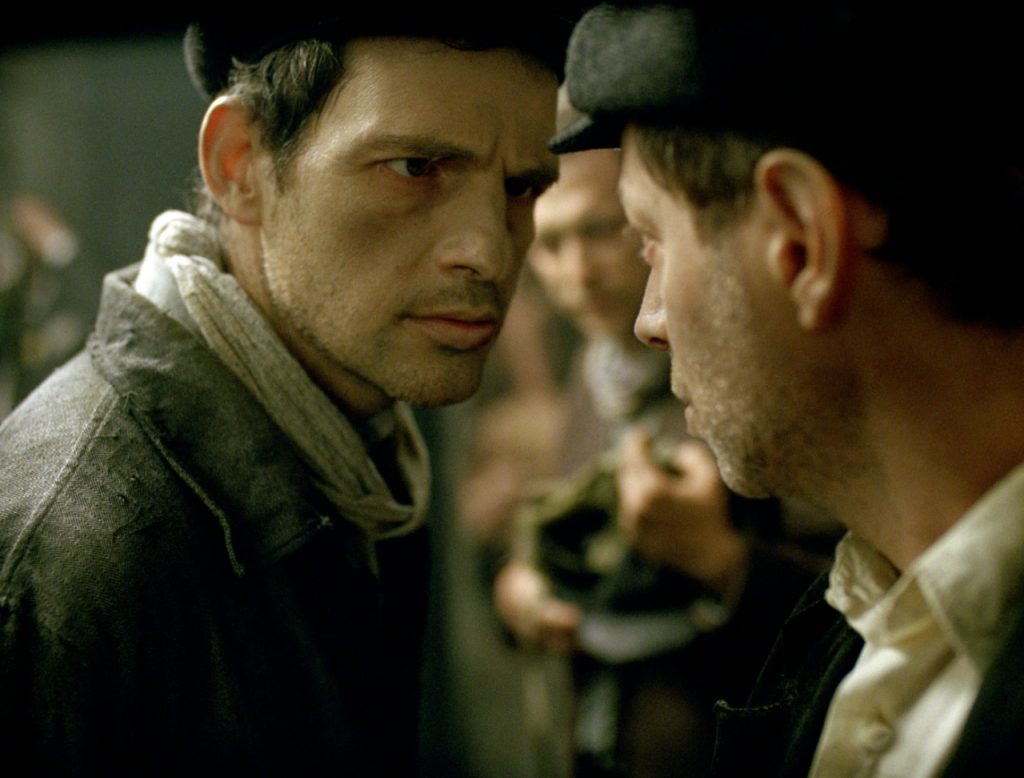
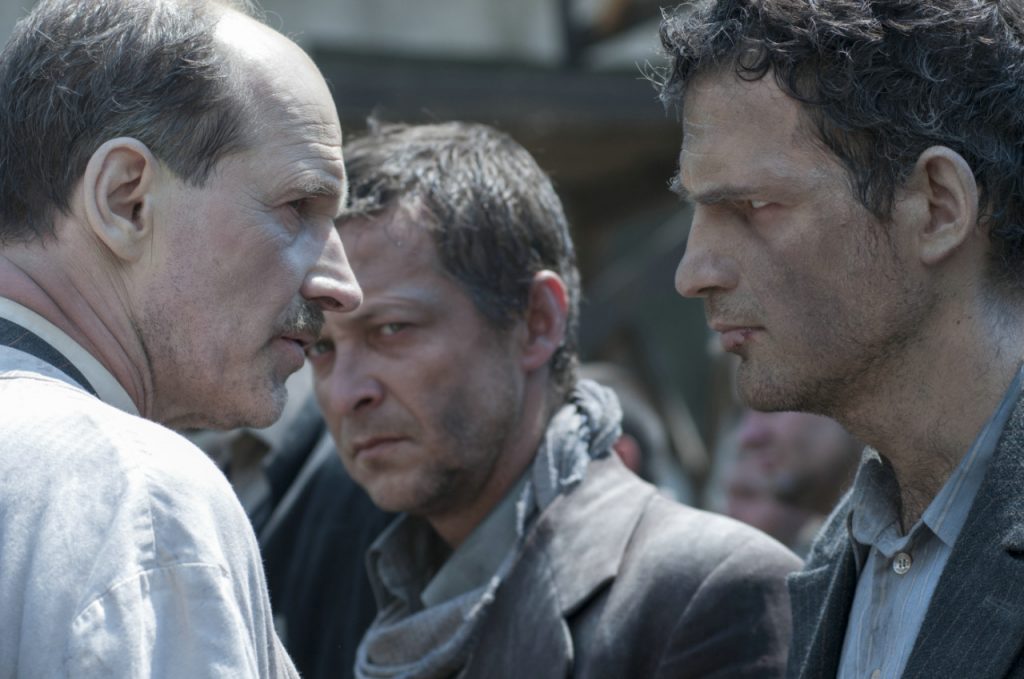
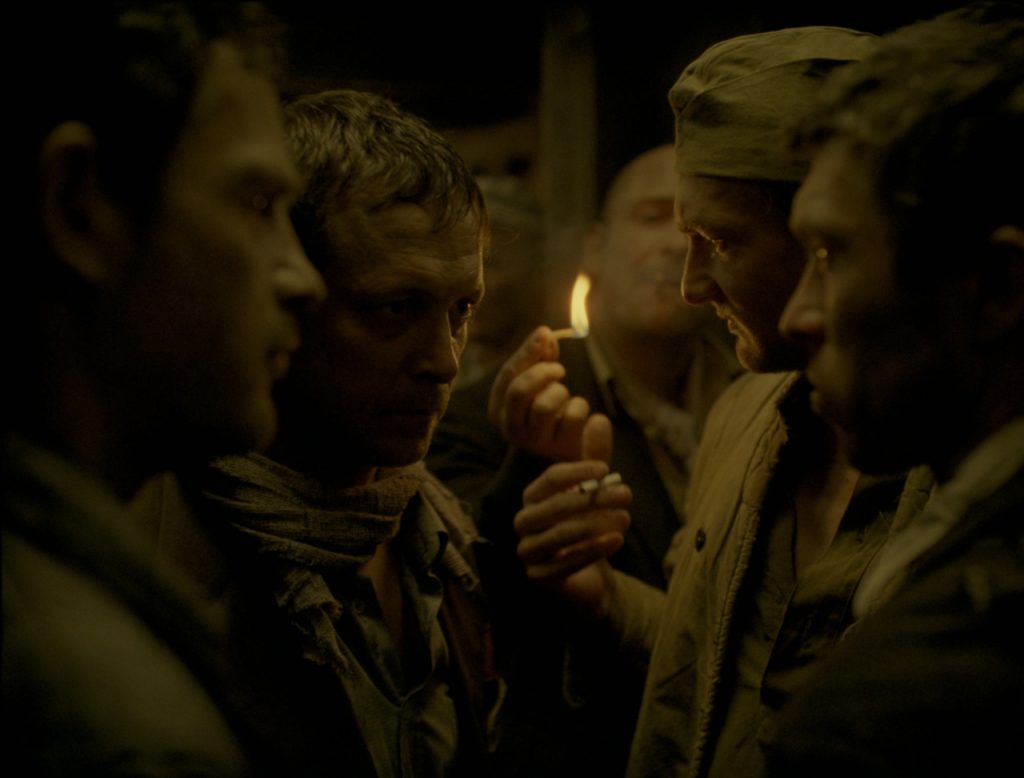
Also, we are glad to be able to screen the Oscar and Golden Globe winning and really outstanding film »Son of Saul« by László Nemes, after the lecture.
Watch the trailer here and read more about this section of our festival below:
Lecture: Auschwitz Cinema. Cinematic Contemplations on the Holocaust by Marcus Stiglegger
Oscillating between the ban of creating images of the intangible and the demand for rememberance, cinematic accounts of the events during National-Socialist occupation proceeded sluggishly at the beginning and were followed by several tentative phases. Eventually, at the end of the 1970s, a cinematic way of representation comparable to Auschwitz literature had been established, a form which evolved a distinct iconography of genocide and concentration camps. The power of those images exerts its influence until the present day. Their iconic character superimposes historical events – even more so: the simulation of those events is being equalled with the actual events. In his lecture Auschwitz Cinema, film scholar and cultural scientist Marcus Stiglegger will, with a focus on the myth-making, present essential tendencies of cinematography, its narratives and its imagery of a fictionalised holocaust. With a cursory look and starting from the post-war period, he will examine a search for orientation in the 1960s, scandalous experiments in the 1970s, the forming of an iconography in the 1980s as well as consider the time after the paradigm shift following Steven Spielberg’s Schindler’s List (1994). Based on different filmic examples, Stiglegger will talk about the contemporary discourse on holocaust, also coherently incorporating marginalised films like Love Camp 7 (1969), Salon Kitty (1976) oder Tras el cristal (1987) into the discourse instead of blocking them out.
Following the lecture: Saul fia (Son of Saul)
(HU 2015, D: László Nemes, A: Géza Röhrig, Levente Molnár, Urs Rechn, 107’, OV with English subtitles, BluRay)
Rather than trying to stay on top of things, this film directly throws oneself into the gear of a monstrous death factory and therein foremostly focuses on a single, tiny cog only. Over the entire time, all events remain committed to protagonist Saul and his perception. Thereby, Son of Saul pursues an interplay which on the one hand declines explicit representations, though on the other hand provides exactly those pictures that—according to Claude Lanzmann, director of »Shoah«— were not permitted to exist. Ultimately, the most horrible thing is what we do not or only insufficiently see and perceive: blurred takes that have to be completed with the help of our fantasy, cheered by a fussing cacophony of death consisting of screaming, shooting and the infinite clatter of the machinery of annihilation.
24 April, 8 pm – UT Connewitz – € 8/6 (red.)

Here’s the second part of our section on young African cinema since two films surely aren’t enough to illustrate the vividness and creativity of contemporary African cinema.
Therefore, in our AFRICAN OUTLINES
programme on Apr 30 we will screen a bunch of films (short and long)
from different African countries that will show you the wide range of
topics and styles to be found in the cinematic landscape of Africa—from
political, post-colonial films to animated experimental films to sci-fi
flicks and beyond.
We’re also very happy to have
media-ethnologist Claudia Böhme at our festival to give some context to
films and introduce us to different strands of African cinema.
Hope y’all had a sunny day! See you soon in the screening hall!
Young Africans: Short films and lecture by Claudia Böhme (University of Trier)
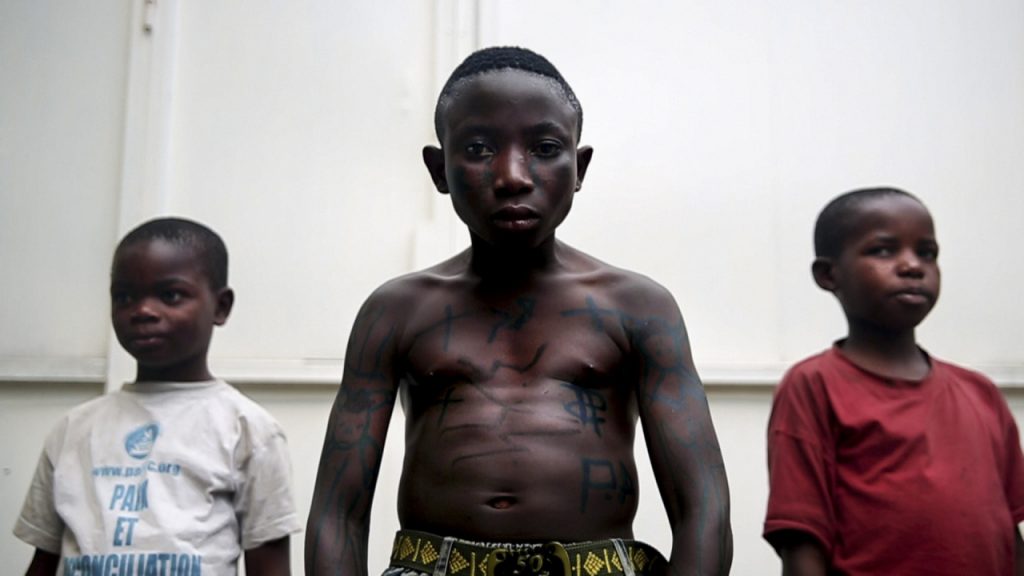
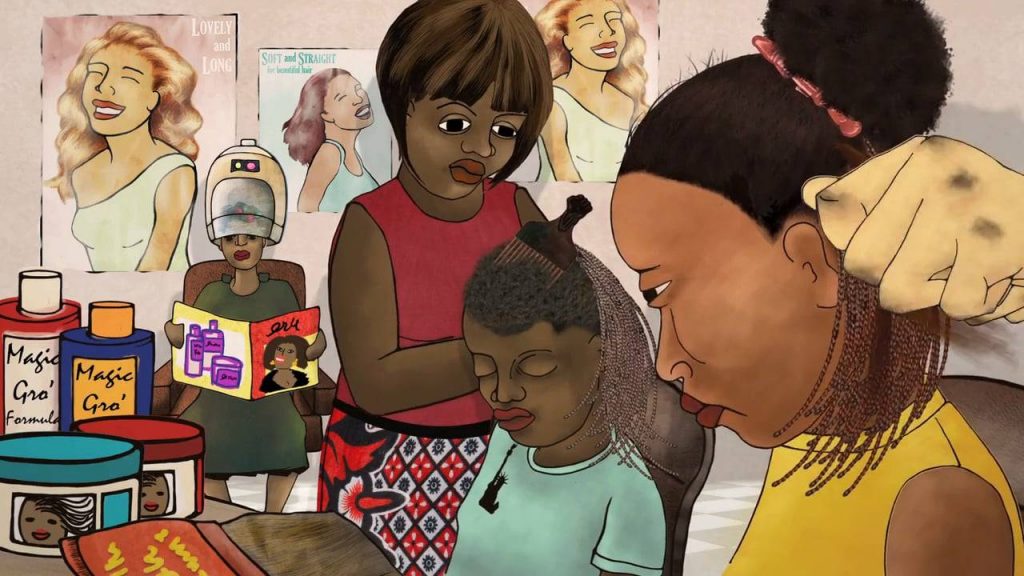
Hand-drawn and puppetry animation, a documentary and a scenic contribution show landscapes of childhood, places of longing and unhuman urbanities which youths not only pass through as vulnerable beings but furthermore critically look at the adult world. For Patient, Guillain and David, there is nothing to lose and everything to win…so get the fuck out of their way. Theo Anthony’s documentary »Chop My Money« accompanies the three children strolling about on the streets of Gomas, talking about their biographies and dreams and about what it means to be a gangster. Soundtrack by Dirty Beaches. »Yellow Fever« shows the effects of Eurocentric ideals of beauty spread by mass media and advertising on African women, while the dream-nightmare-clash »Walk With Me« tells the story of a young Ugandan girl wishing to be a ballerina. »The Goat« supplements the compilation with a tale of a male circumcision ritual through which one becomes a man and that is to cure of homosexual desire.
Chop My Money (CD 2014, D: Theo Anthony, OV with English subtitles, 13’)
Yellow Fever (UK/KE 2012, D: Ng’endo Mukii, OV with English subtitles, 7’)
Walk With Me (DK/UG 2015, D: Johan Oettinger, Peter Tukei Muhumuza, no dialogue, 12’)
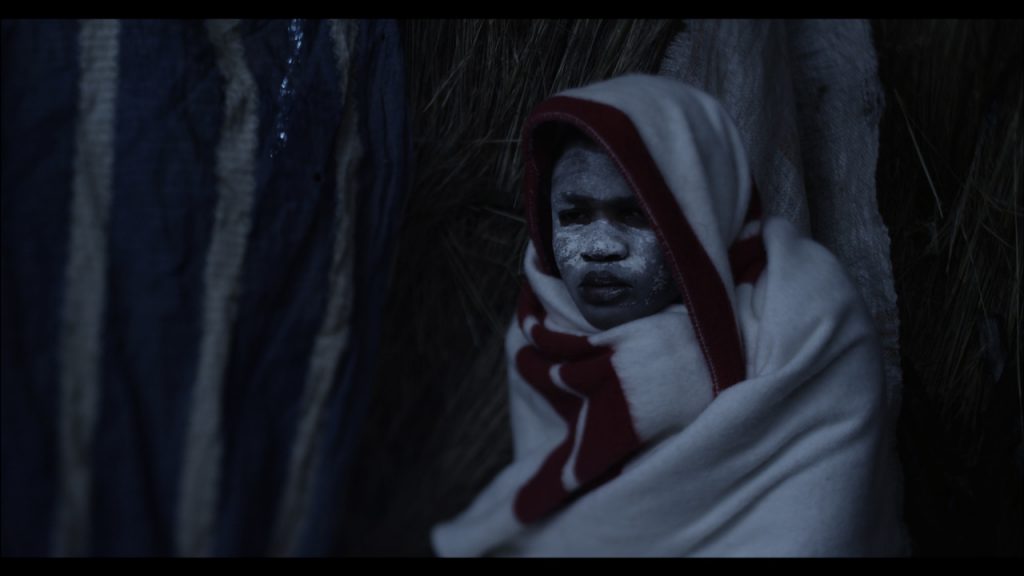
The Goat (SA 2014, D: John Trengove, OV with English subtitles, 13’)
Introduction by Claudia Böhme (University Trier)
Claudia Böhme works as media-ethnologist and actress. Her thesis deals with the establishment of a video film culture and an associated industry in Tanzania and processes of cultural negotiation initiated by that. During several years of field research at Dar es Salaam, she accompanied the work of filmmakers and film institutions. Her lecture will introduce us into the history of African filmmaking and give an overview of diverse regional and national film productions along with their distribution and reception. In addition to that, it will be about new developments and movements of »African Cinema«, trends of trans-nationalisation and about the question of boundaries of reception. Lecture in German language.
30 April, 10pm – Schaubühne Lindenfels
6,5/5,5 (red.) euros // 9/8 (red.) euros for a combined ticket for both screenings
Necktie Youth
(ZA/NL 2015, D: Sibs Shongwe-La Mer, A: Sibs Shongwe-La Mer, Bonko Khoza, Colleen Balchin, 86’, OV with English subtitles, BluRay)
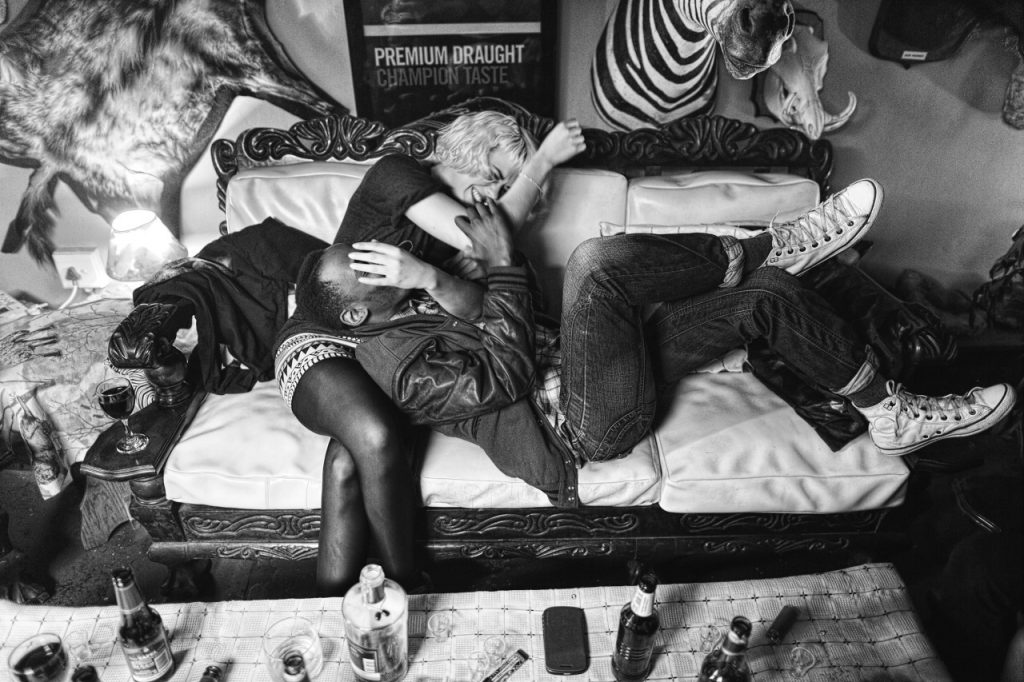
The suicide of a young woman named Emily, who has streamed her decease live on the internet, is on the mind of a group of mid-twenties. No matter if white or black, nobody can escape from the feeling of one’s own insignificance. Director Sibs Shongwe-La Mer knows what he is talking about: his script and characters are inspired by his own biography and the events happening in his immediate environment. In his debut feature, he consistently plays the lead as the young man September, whose best friend Jabz was being with Emily. They all belong to a post-apartheid generation in South Africa, searching for their own place, willing to create their own identity and grandiosely failing in doing so. Rich, middle-class offspring, whose inner solitude and emotional distance is superimposed by coke, parties, image and eccentricity. With the help of toughness and by being real, they are caught up in a vortex devouring any relevant communication on a personal level. They want to be away from the street at all costs, but they are not. They are living in mansions, they are bored in mansions and every once in a while they also hang themselves there. Omnipresent images of poverty and impoverishment are scrutinised in stylish monochrome pictures. They are an inventory from the inside of a maniac world. Despite of all their accusations, a melancholy attachment resonates in them, a regret and a profound wish for change.
30 April, 10 pm – Schaubühne Lindenfels
6,5/5,5 (red.) euros // 9/8 (red.) euros for a combined ticket for both screenings