
…BUT!—let’s not forget about the endless possibilities of FICTION! On April 07 at Schaubühne Lindenfels we will see two contemporary cinematic statements showing how the fiction film can be a vehicle for revealing
political and economic relations and structures of society. The works shown are Clemens von Wedemeyer’s recent sci-fi parable ESIOD 2015 and Daniel Hoesl’s capitalist play WINWIN. We are more than happy to have director Daniel Hoesl as well as Stephanie Cumming, who’s starring in both of the films coming to the screening for a Q&A. April 07 also marks the day of the opening of our TRUE POLITICS exhibition at Schaubühne Lindenfels’ ballroom. More infos on that will soon follow.
07 April, 9pm – Schaubühne Lindenfels
€ 8 (6 red.) for a double ticket incl. WinWin
Actress Stephanie Cumming will be present.
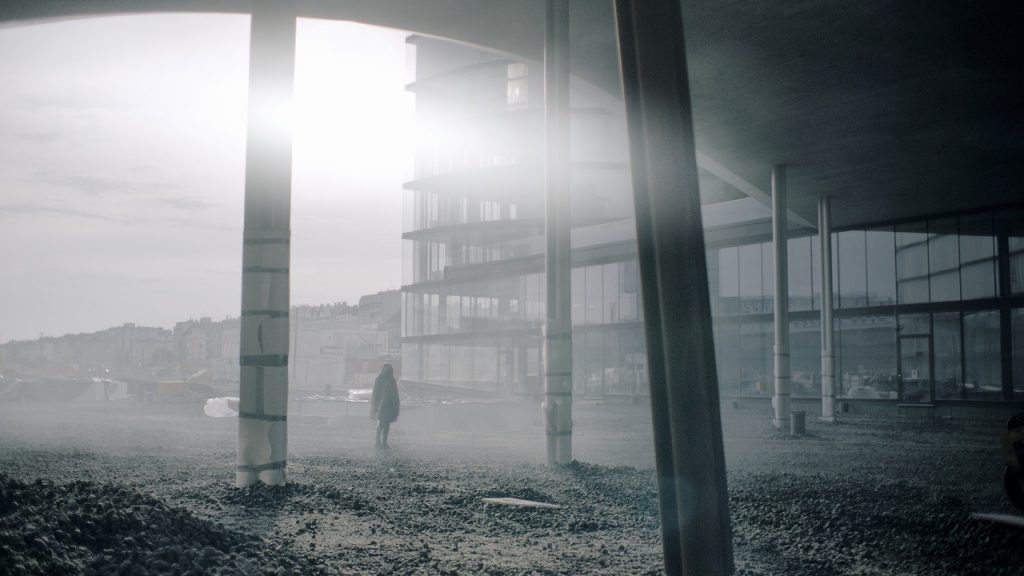
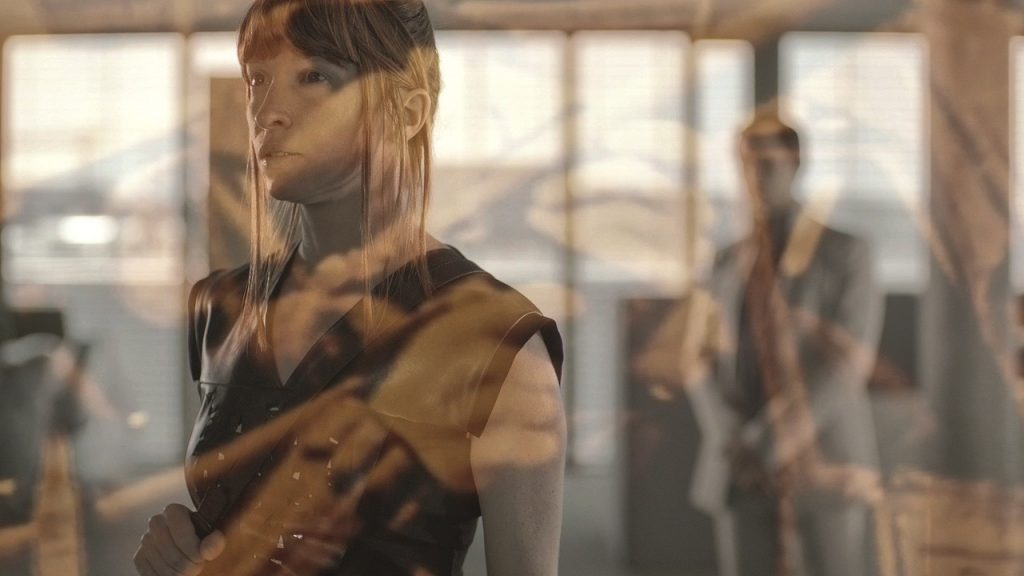
ESIOD 2015
AT/GER 2016, D: Clemens von Wedemeyer, A: Stephanie Cumming, Sven Dolinski, English OV, 39’ DCP
Vienna 2051. After years, Esiod returns to the city to terminate her bank
account. Not only is there financial data on that account, but also memories and personal information are digitally stored in it. Esiod is not recognised by the computer system. She has to undergo a memory check, whereby her reactions to the account’s data, videos and pictures are observed. Identity verification is strict and contains, among other things, a record of movements, in which the motoric patterns of a human being are, in every detail, recorded in the register. Shooting location of ESIOD 2015 is the half-finished „Erste Campus“ of the Austrian savings bank in Vienna, a construction project whose parts of the building seem like leftovers of a post-apocalyptic, deserted area. Director Clemens von Wedemeyer creates layers of dystopian science fiction and projects the current financial crisis and the virtualization of work, life and capital onto the architecture temporaily set in a not all too distant future. His protagonist increasingly gets lost in the boundaries between real and virtual space, and likewise the film itself disintegrates more and more into transparency, turning into a pixel cloud.
Director Daniel Hoesl and actress Stephanie Cumming will be present.
WINWIN
AT 2016, D: Daniel Hoesl, A: Christoph Dostal, Stephanie Cumming, Jeff
Ricketts, Nahoko Fort-Nishigami, OV/English subtitles, 84’, DCP
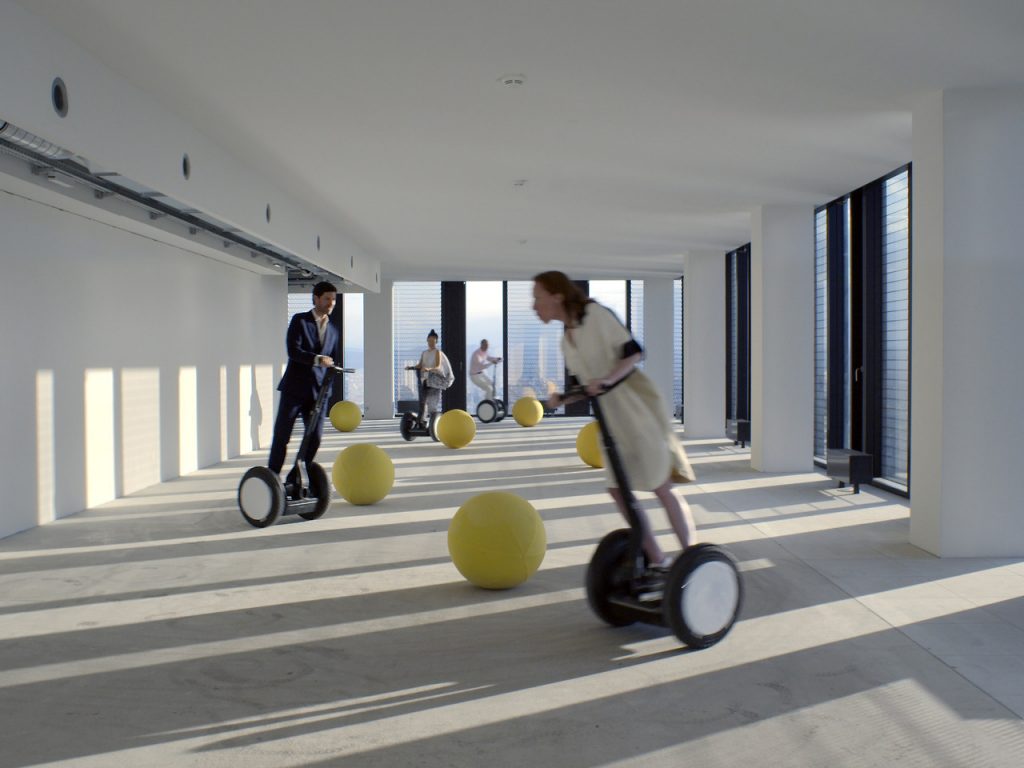
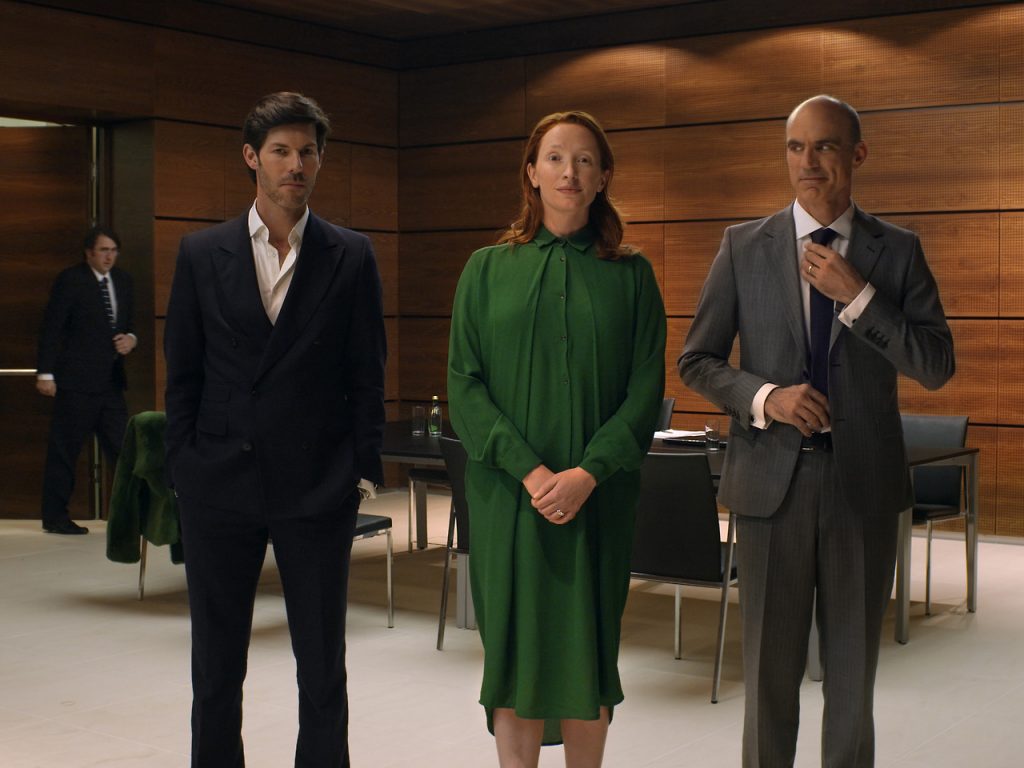
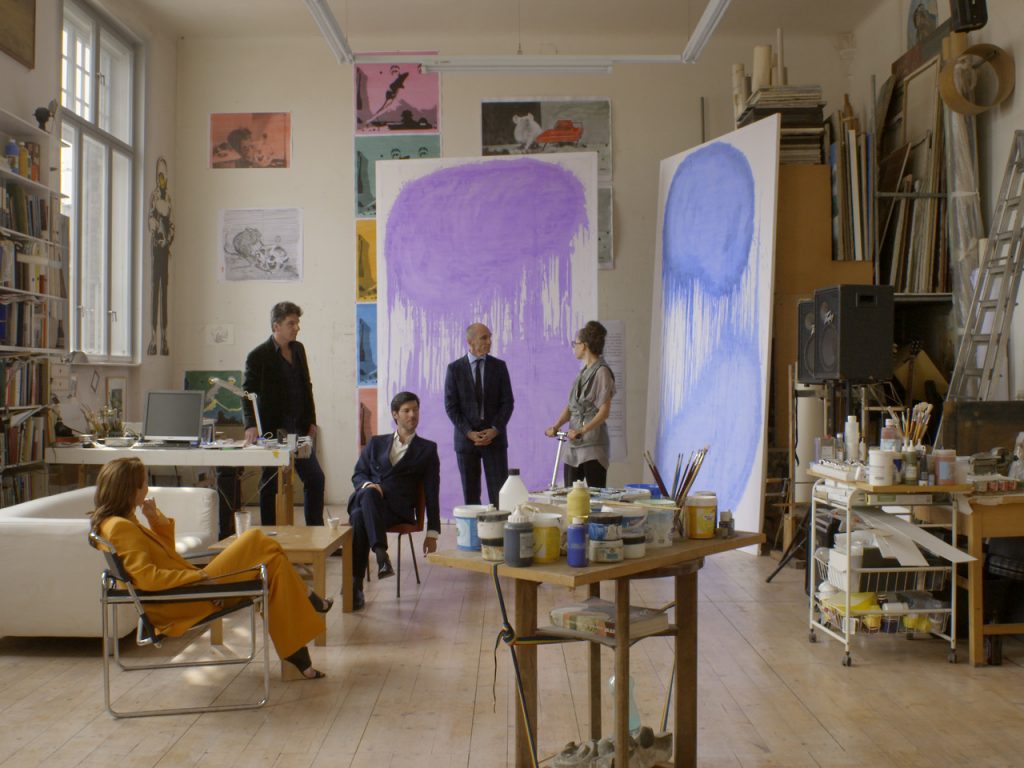
WINWIN, these are four smart investors, a group of cosmopolitan itinerant
preachers jetting around inside a world beyond risk. Every time they are on firm ground again, they lead companies to a still even better future. They are networking, challenging, eating, stretching, expanding, downsizing. Their clothes fit perfectly, everything they say is intonated pleasantly. They talk to us directly from the screen, their words are diconnected, floating in the room, are not directed at any reality and still affect us all. However, the film’s dialogues are based on facts, taken from personal meetings with investors, executives and other members of the superrich. WINWIN is an aesthetically consistent, ambiguous reflection on mechanisms of the postmodern, global financial capitalism—the caustic humor of the film begins where fun has come to an end. Straight from the parallel universe of power, the pictures appear like an absurd dream, a jazzy roundelay of pictures from a mostly low-noise, superficial world. Director Daniel Hoesl, the “Bertolt Brecht of the techno generation” (Wroclaw International Film Festival) and his production collective European Film Conspiracy frame a severe comment on a world by using this world’s own weapons to level them at it. Everything is elaborately choreographed, digital and vigorously thought-out, everything is clean, polite and, all the same, somehow repulsive. It is a world where everyone is preaching love and is earning gold.
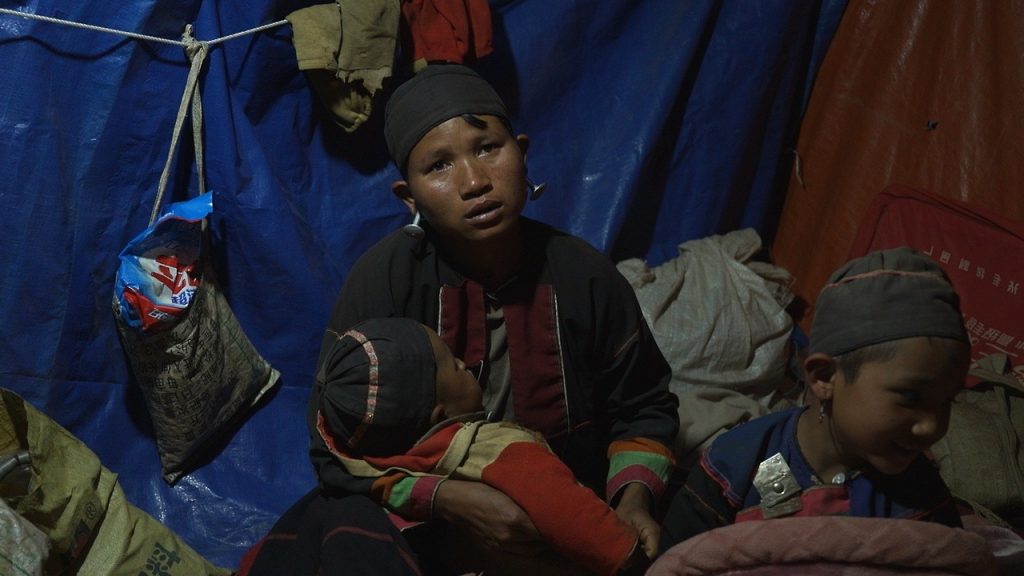
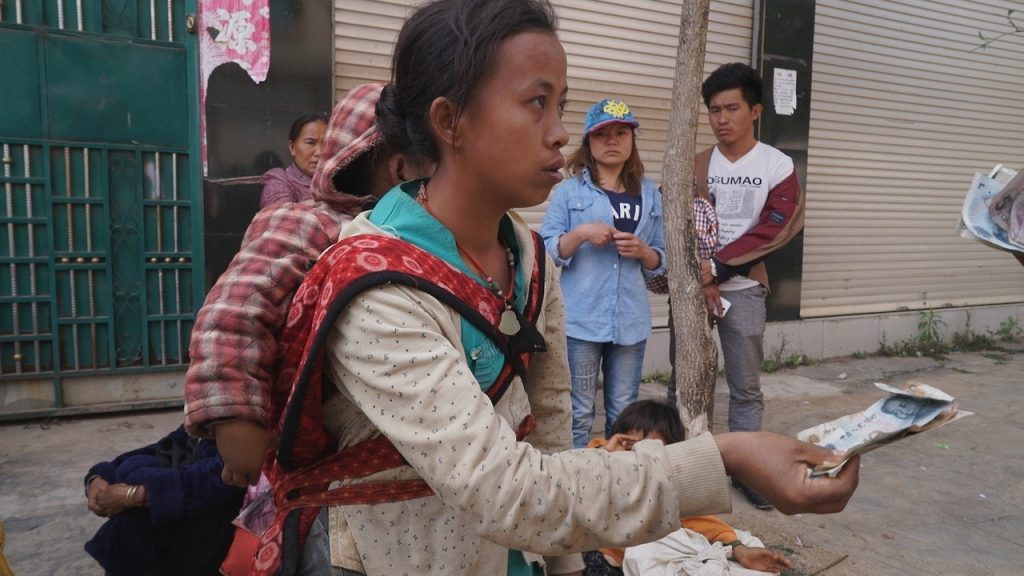
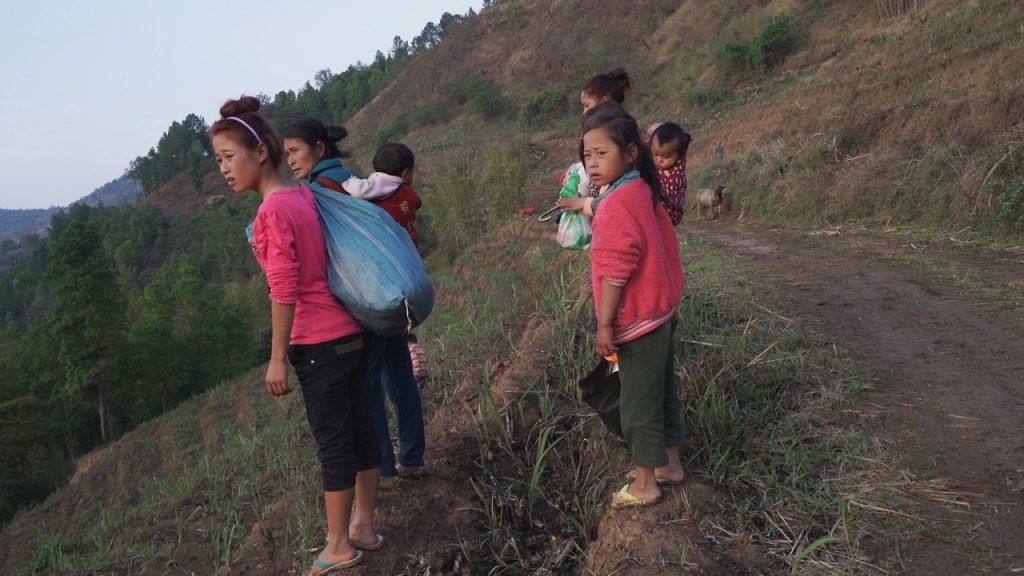
As you might have figured already, we have a strong focus on the documentary format and its cinematic potentials at this year’s GEGENkino. Hence, on April 10 at UT Connewitz we take the opportunity to show the film “Ta’ang”—a new documentary by the often-heard-of, but probably only seldomly received Chinese director Wang Bing. With “only” 2 hours and 20 minutes this film is one of the shorter works by Wang Bing—a filmmaker famous for films like like the documentary “Crude Oil”, clocking in at 14 hours of length. “Ta’ang” is a very engaged study of one specific ethnic minority—the Ta’ang—and of displacement and existential migration in general—a topic which we’re dealing with in several section of our 2017 programme.
TA’ANG
HK/F 2016, Doc, D: Wang Bing, OV/English subtitles, 142’, DCP
Whether as a nine hour long-term study about the impoverishment of hundreds of thousands of workers and the politically intended decay of complete industrial regions or the portrait of three sisters now on their own, having been left behind by their parents because of financial constraints – the films of Wang Bing show disintegrating environments aloof from a rampant economic growth. The new work of the Chinese documentary filmmaker is familiarly radical in the reduced use of its means. At it, the film develops a strong aesthetic and emotional pull that exceeds an impersonal representational function. With TA’ANG, Wang faces the ethnic minority of Myanmar with the same name (also known as Paluang), having been victims of Burmese civil war for decades. In 2015, violence flared up once again and caused an exodus of the Ta’ang to China. Today, up to 100,000 refugees, chiefly women, old poeple and children, are living quasi-nomadically in unsteady camps in the province of Yunnuan, hoping to return soon. The film opens up as seemingly aimless, looking for orientation in unknown surroundings, but develops a precise sequence of movements, ranging from the microscopic view on afflicted people – searching for a resting place, making a fire and cooking, having conversations, estimating the distance to war by the volume of the explosions – right up to humanitarian contexts of war.
10 April, 8pm – UT Connewitz – € 6,5 (5,5 red.)
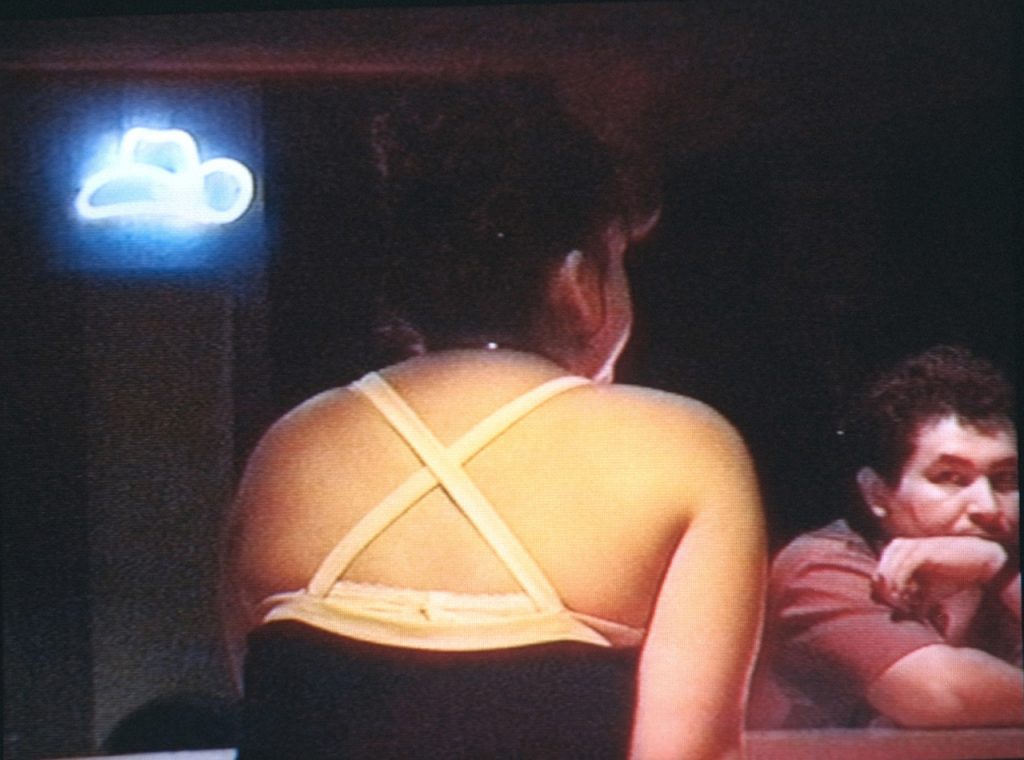
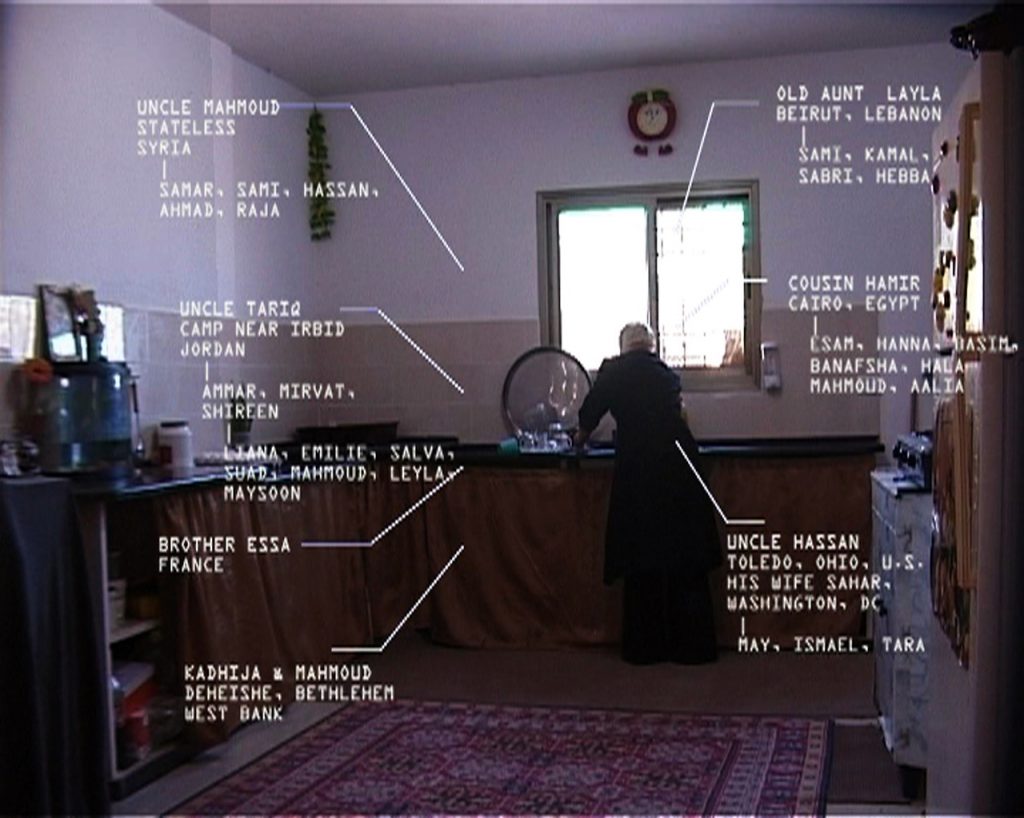
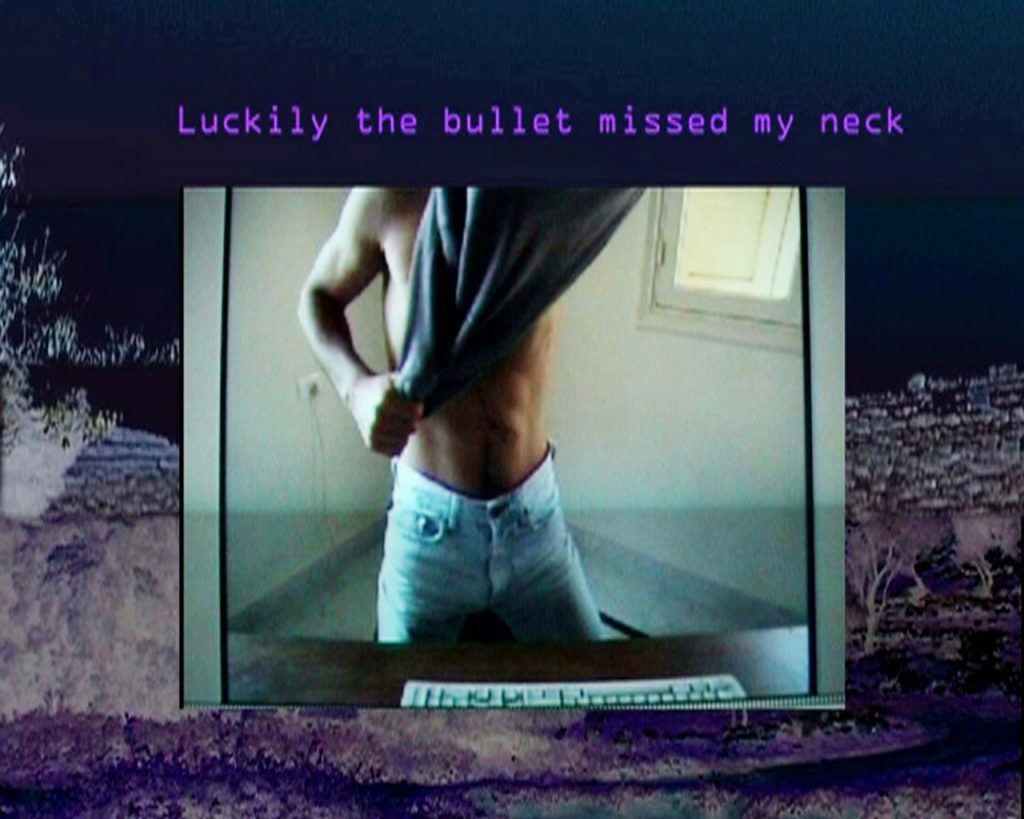
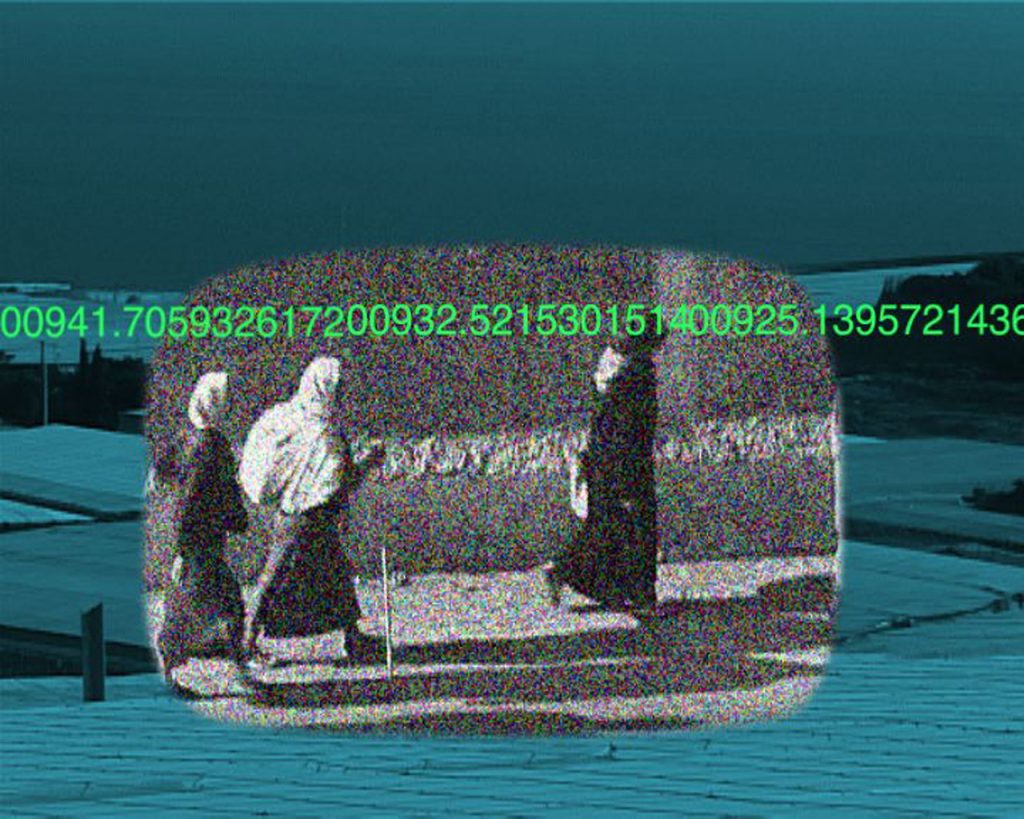

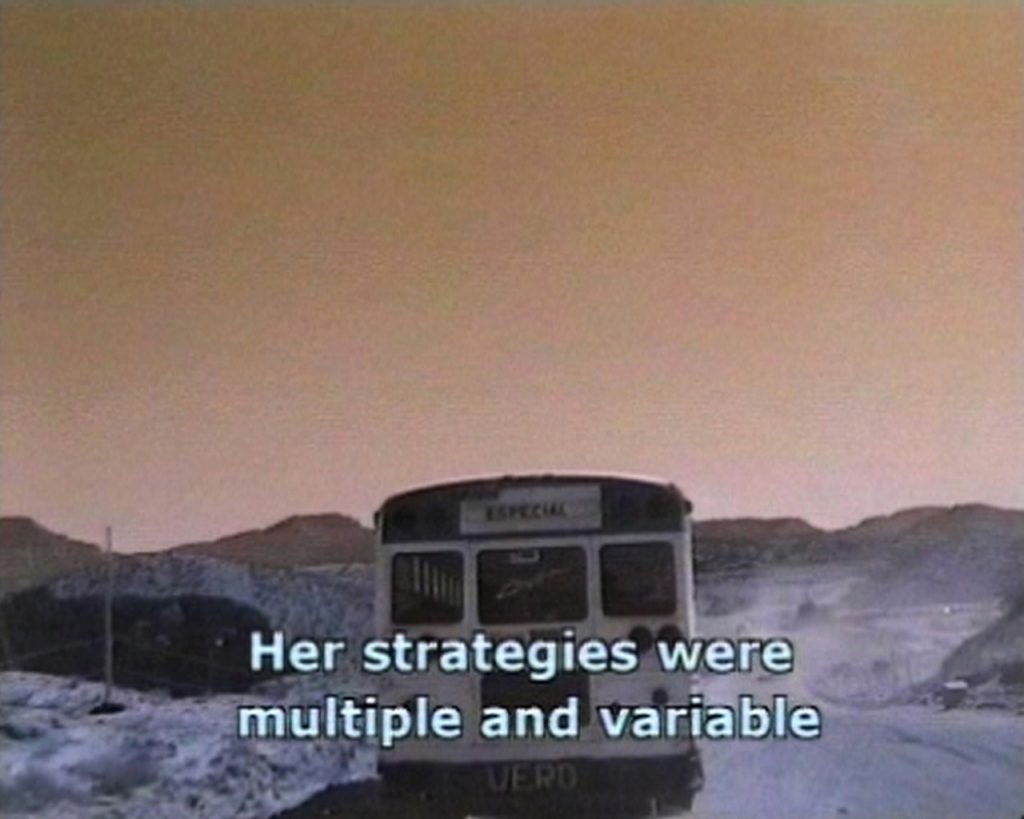
…and here comes another sort of tribute—this time to Swiss video Ursula Biemann and her great GEOBODIES project, which is still far too unknown and seldomly seen, we think. That’s why we will dedicate a programme section to the video works of Ursula Biemann, which will be screened 09 April, 9pm at Schaubühne Lindenfels. Under the title “Border activities“, we will show three of her earlier migration-related works for which Biemann went to Mexico, Palestine and Morocca in order to combine field research in border regions with the search for political engagement as a media artists, though always on the level of single individuals—or as the fresh’n’wise 4trackboy just recently put it: ”Am schimmernden Horizont der Identität erkennt man, Grenzziehung ist immer auch ein Grenzgang.”
Read more about the “Border activities“ video programme below and find out more about Biemann and her works on her GEOBODIES homepage.
Ursula Biemann: Border activities
Performing The Border (MX/CH 1999, 43’, OV w/ English subtitles, DCP)
Europlex (MA/ESP/CH 2003, 20’, OV w/ English subtitles, DCP)
X-MISSION (PS/CH 2008, 40’, OV w/ English subtitles, DCP)
Already in recent years, GEGENkino always posed the question of the possibilities of political film and video art, e.g. in hommage programmes for Harun Farocki and Hito Steyerl. In this year, we want to open up the field anew—this time, with a special interest in the self-positioning of the artists with regards to the political constellations that their artistic practice is dealing with. Looking back on some works of Swiss video artist Ursula Biemann will not only highlight an interesting position toward this problem, but also point out of what up-to-day importance the topics treated still are. As an “embedded artist” Biemann explores different crisis-ridden border regions, collects material and is looking for an artistic form that will combine the findings of her field reasearches as well as her theoretical insights and personal stories and, in doing so, will make visible the reciprocity and contingency of individual, micropolitical and geo- and macropolitical processes.
Biemann’s earliest video work already carries the programmatic title Performing The Border and points to how borders and border regions are not only souvereignly state-defined entitites, but are, more significantly even, created through individual and communal activities in these regions. For this work, Biemann reasearched the consequences that the nearshoring of US American manufacturing facilities to the border town of Ciudad Juarez have had for the (mostly frmale) Mexican workers and especially how drastically lives and communities get gendered and criminalized by these practices. Another work called EUROPLEX, done in collaboration with visual anthropologist Angela Sanders, investigates another specific border region, namely the Spanish-Morrocan border at the Spanish exclave Ceuta and shows the predicaments of women that depend in an existential way on smuggling goods across this border—an activity that, in the end, appears almost like a ritual in its repetitiveness. X-MISSION, by contrast, approaches the the topic of the border by means of a different topos: the refugee camp – and explores the logic and legibility of this space, taking Palestinian refugee camps as its prime example. Biemann is trying not to portray Palestinians in the context of the Israeli–Palestinian conflict, but explorates these camps in an immanent manner – still, without neglecting the poltical and discursive contingencies of these places. By use of montage of first- and second-hand interview and video material, once more, this is an artistic reasearch in the entanglements of micro- and macropolitics – a topic that is prevalent in all of Biemann’s works.
09 April, 9pm – Schaubühne Lindenfels
€ 6,5 (5,5 red.) / € 8 (6 red.) for a double ticket incl. THOSE SHOCKING SHAKING DAYS

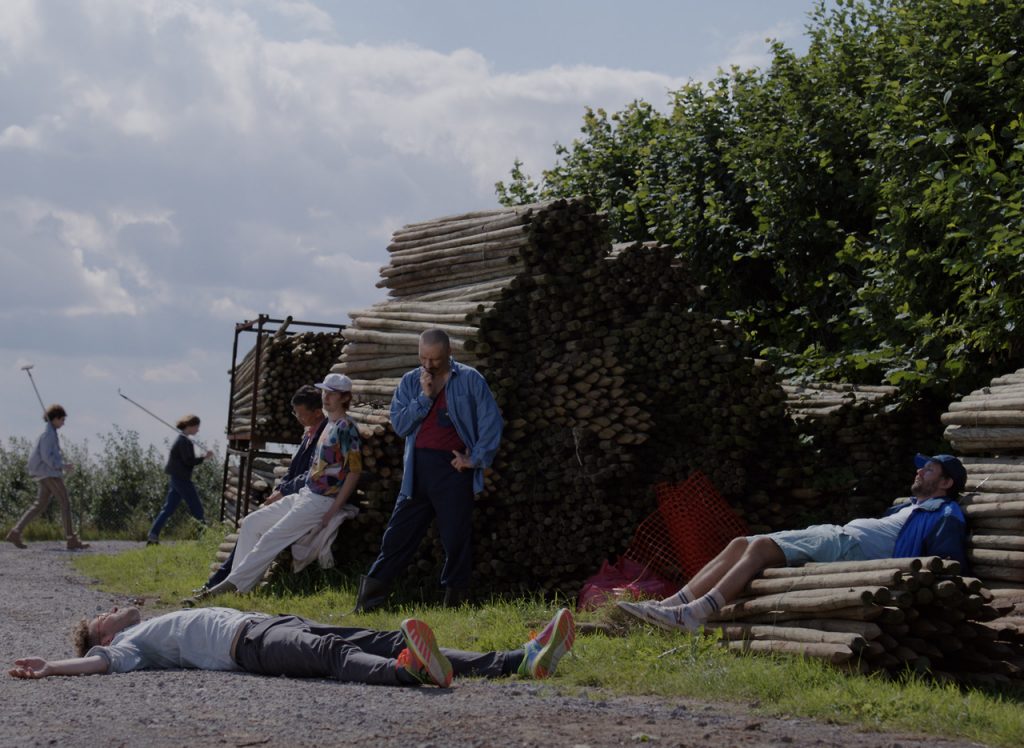
Isn’t it oh so hard to make a true communist movie?! Sure, it is. Julian Radlmaier (”Ein proletarisches Wintermärchen”) knows about these things and will show us—in an honest and self-questioning way—his struggles with trying and trying and trying to be a political filmmaker in his newest film with the beautiful and telling title “Self-Criticism of a Bourgeois Dog“ on April 12 at Luru Kino at the Spinnerei. Despite all the vanity of art, this is still a really humorous film. Trust us!
Read more about the film and find the trailer below.
Director Julian Radlmaier and producer Kirill Krasovski will be present.
Self-critisism of a bourgeois dog
GER 2017, D: Julian Radlmaier, A: Julian Radlmaier, Deragh Campbell,
Kyung-Taek Lie, Beniamin Forti, 99’, OV/English subtitles, DCP
Julian, young and unsuccessful, pretends to study the everyday realities of
the working masses for his new film project, but actually wants to go
to bed with Camille only. Thus, what a happy chance that the young Canadian actually moves to the wasteland of Brandenburg with him! Is this the beginning of a proletarian summer’s tale? First doubts arise while picking apples under the relentless yoke of thoroughbred capitalist Elfriede Gottfried. Besides Camille’s persistent indifference, he is especially bothered by the Georgian assertiveness of fellow team member Zurab. Fortunately however, there is friendship (Sancho & Hong) and miracles (Franz von Assisi?). When the picturing of a more just and freer society dashes against the discord of exploitees and a reawakening of feudal nobility (a marsh along mountain chains…), Julian escapes back to his hotspot neighborhood, while Camille, Hong, Sancho and the monk decide to follow the signs and go out into the world. Italy in this case, land of the last utopia. In his graduation film at Deutsche Film- und Fernsehakademie Berlin (dffb), Julian Radlmaier addresses himself to major issues: faith, love, cinema and communism. Apart from being nonchalant and colourful, his film is most notably a piece of playful self-irony: “Thank God that everything was merely a film.”
12 April, 8pm – Luru Kino at the Spinnerei – € 6,5 / 5,5 (red.)
Hey everyone,
here’s a shiny new item for our GEGENkino 2017 programme, straight from the think tanks of US American parapsychological societies… in a way:
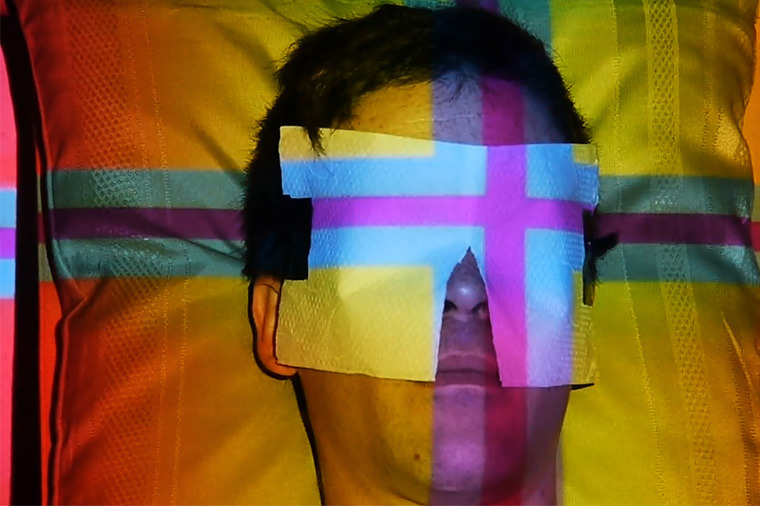
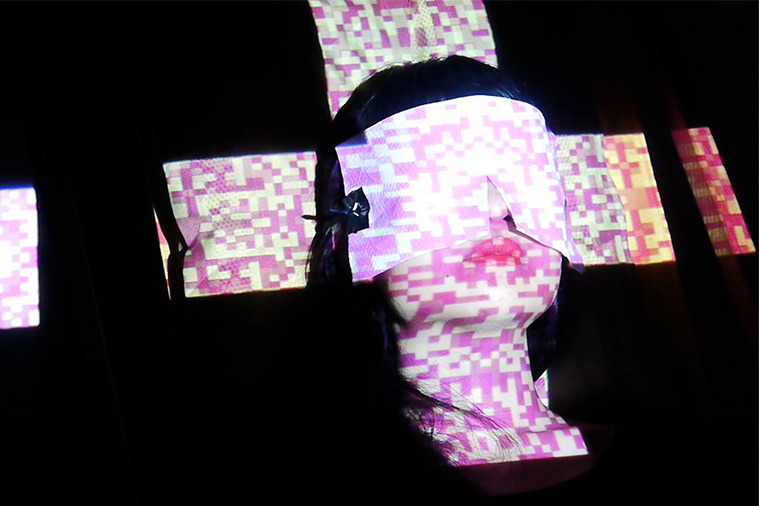
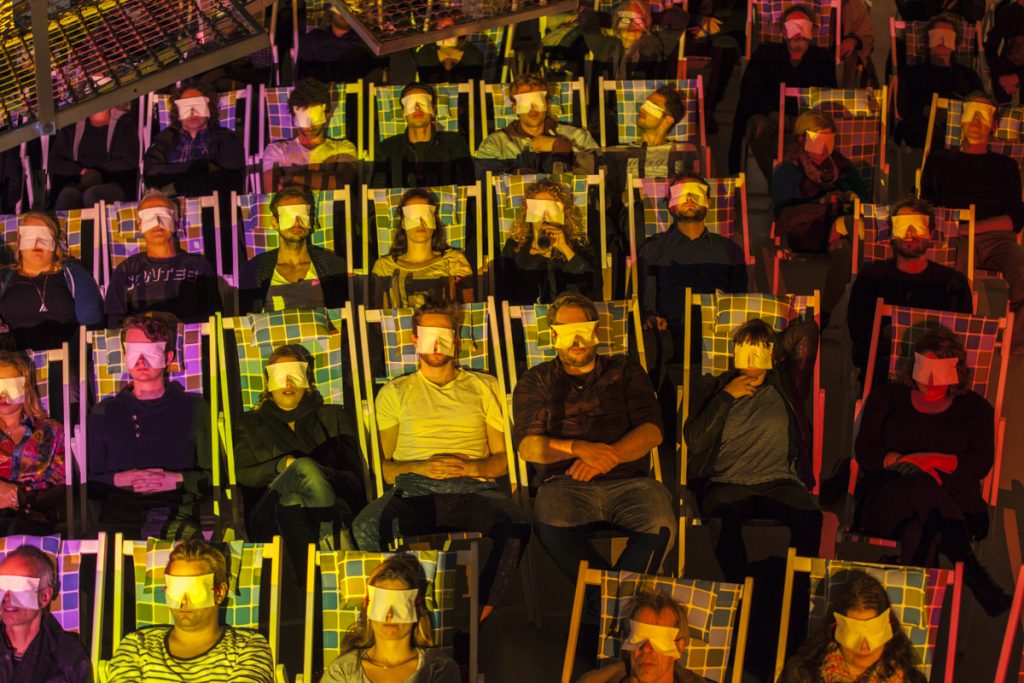
Berlin-based media artist Doron Sadja will bring his COLOR FIELD IMMERSION project to Leipzig for the first time on April 13. This performance/installation/experiment—inspired by government comissioned psychological tests from the 70′s—taking place at UT Connewitz, will pull you into an audiovisual trip, the experience of which is strictly recipient-dependent. Is this still cinema? Cinema for psychonauts maybe with images as close to your mind and retina as possible.
Read more about the event below.
Best,
your GEGENkino crew
Light and sound performance by Doron Sadja
COLOR FIELD IMMERSION
The attempt to make the cinematic experience more direct, immersive and intense for the audience had to its last grand manifestation in the revival of 3D cinema. Whether it really succeeded in heaving cinematic experience and perception to a new level can be doubted, especially in cases where technology remains merely gimmick rather than becoming an artistic instrument. In his very diverse works, US media artist and ambient musician Doron Sadja is consistently looking for new ways of sounding out the audience’s experiences on auditive and visual levels and thus, making hidden realms of sensual perception accessible to them. At it, experiments of perception and technological set ups from the history of science are often his starting points. For COLOR FIELD IMMERSION, Sadja has addressed the so-called “Ganzfeld experiments” of the 1970s. In these tests, the eyes of the participants were blindfolded with translucent materials and coloured light projected onto them. By this continuous sensual deprivation on the part of the participants, some people were hoping to activate clairvoyant and telepathic capabilities. Without adhering to these parascientific ambitions, Sadja took the test situation and developed his COLOR FIELD IMMERSION performance from it. Along with a matching electronic multi-channel soundtrack in the style of Sadjas “Breath Heart Skin” album the cinema screen will be moved to only a few centimeters before the retina, so that Sadja’s visual compositions will hit every single spectator differently depending on spacial position and current frame of mind. A parakinematographic situation, in which there run just as many films as there are pairs of eyes.
People with photosensitive epilepsy be adverted that there will be intensive light stimuli during this event.
13 April, 9pm & 10:30pm – UT Connewitz – € 12 (10 red.)
Also, get an impression of how the whole COLOR FIELD IMMERSION thing’s gonna look like right here: