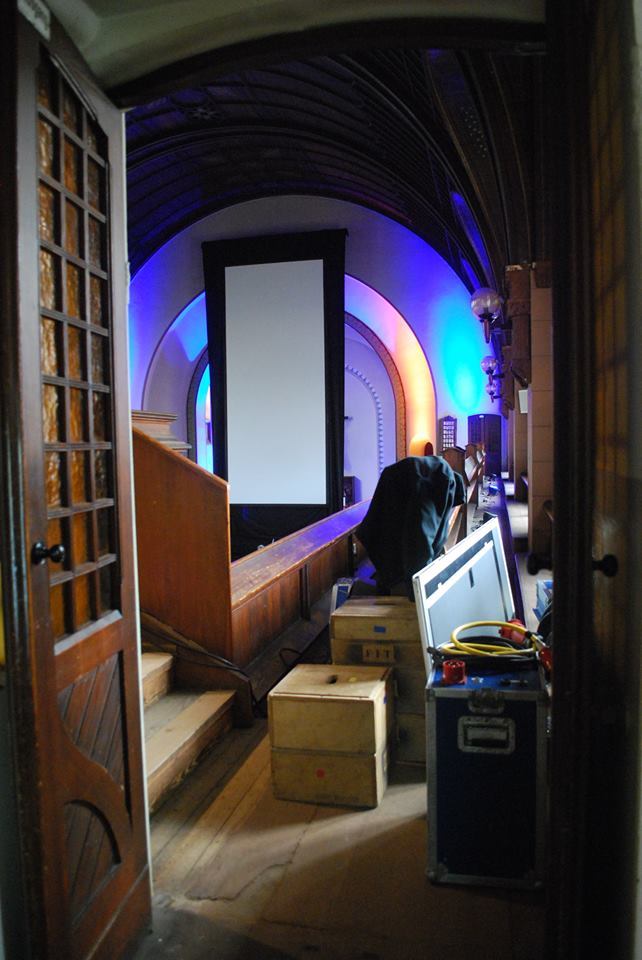
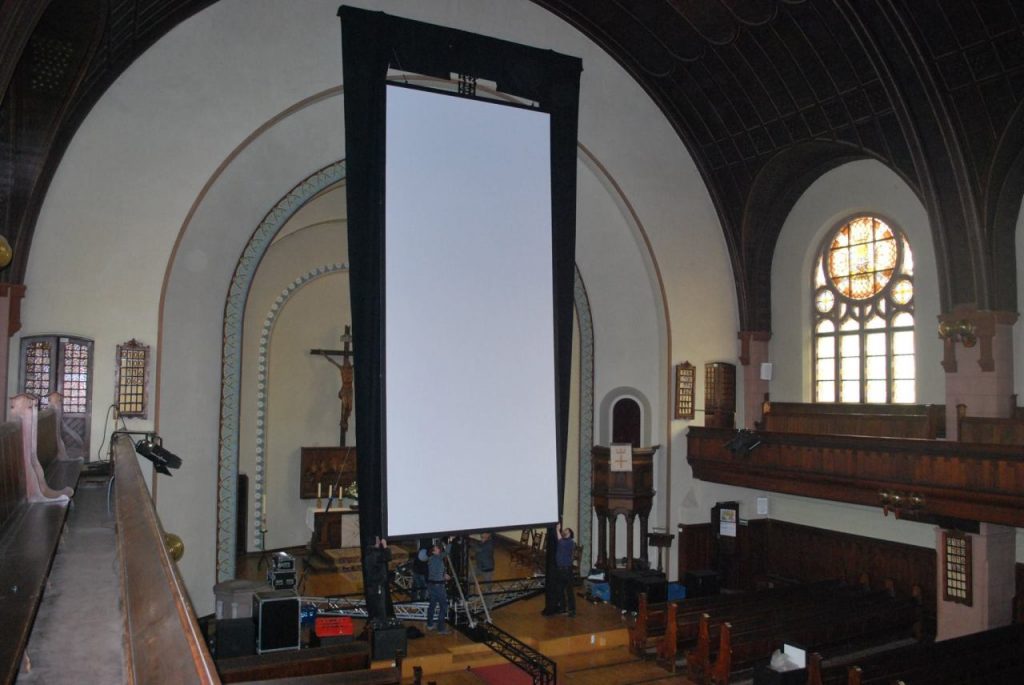
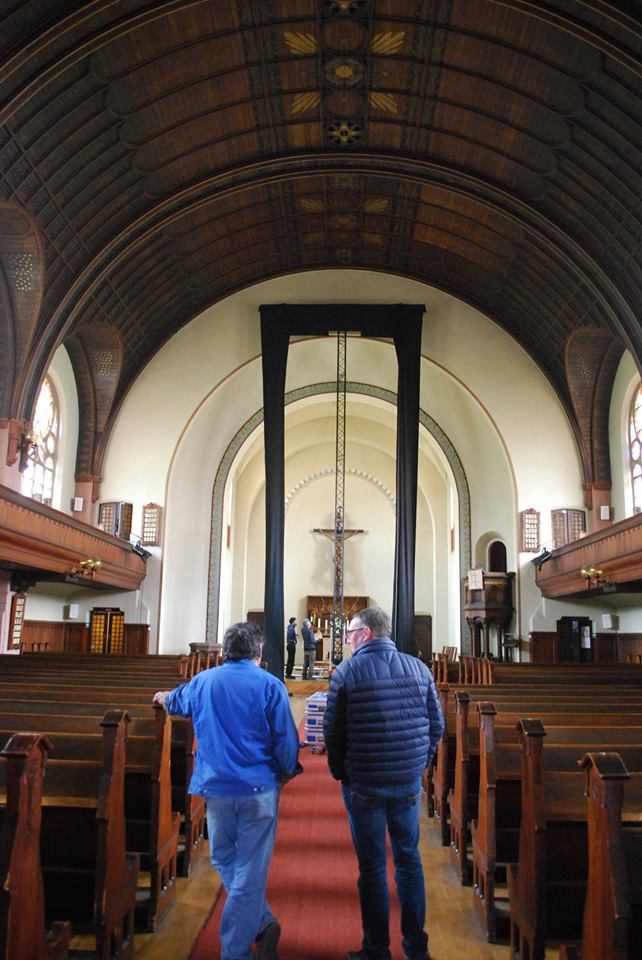
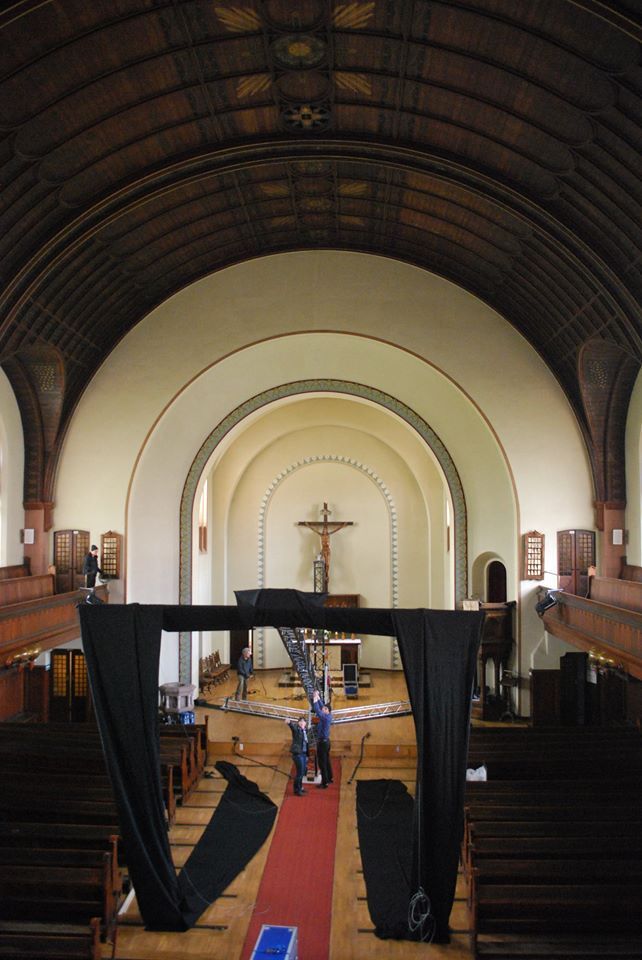
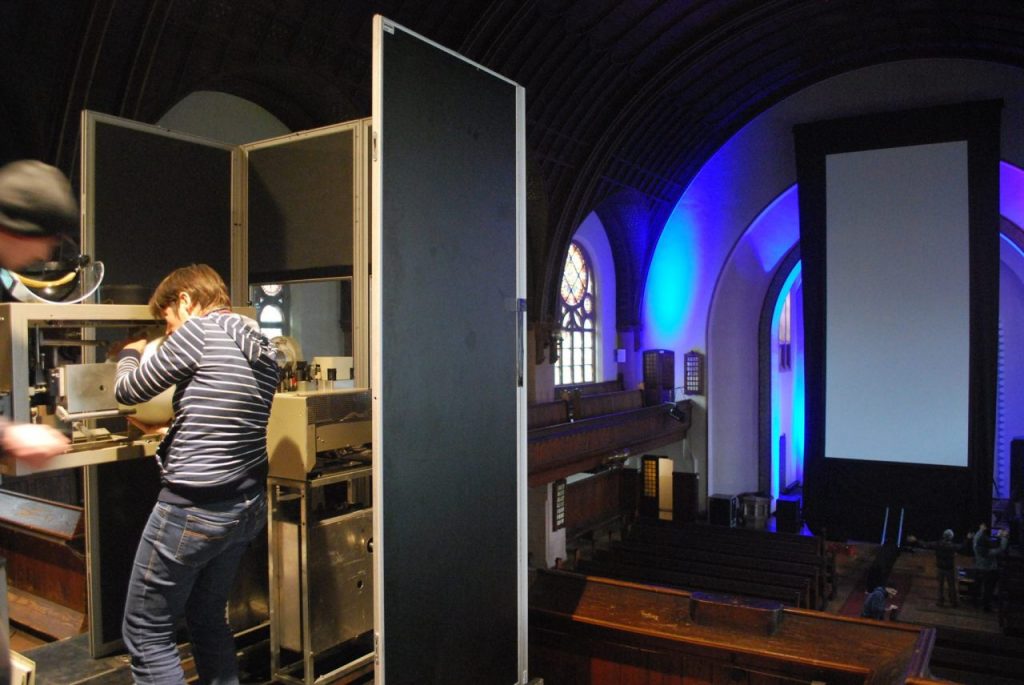
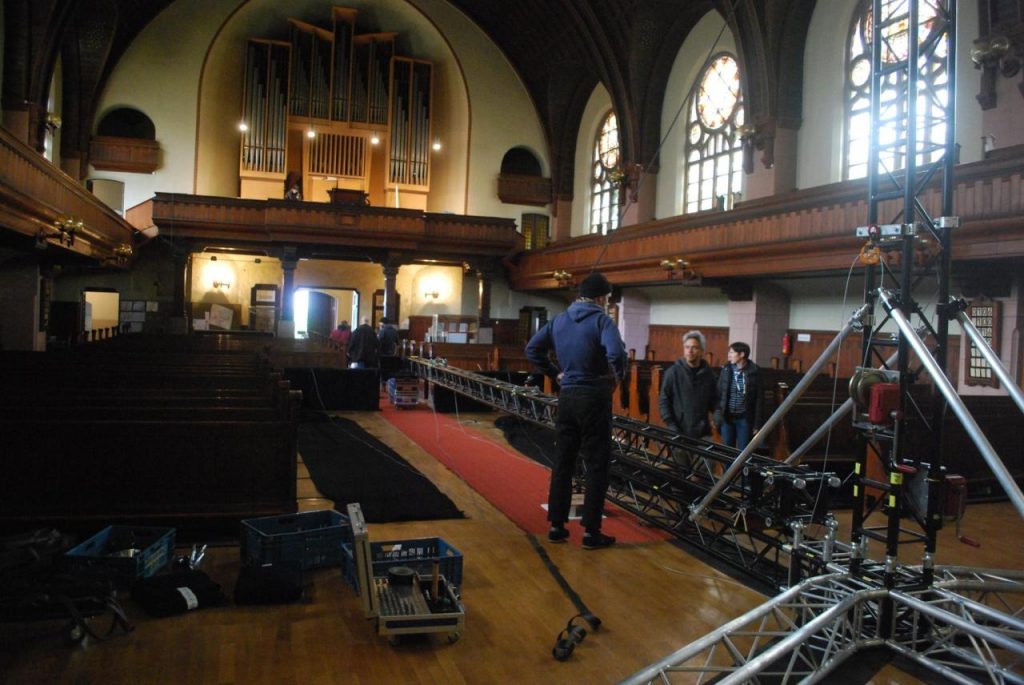
Preparations for VERTICAL CINEMA yesterday went pretty good as you can see! So, you all know what will be going down tonight, don’t you? If not, read again about it here on our blog.
Plus, here’s some further useful information about tonight:
Doors and ticket counter will open at 8pm.
The address of Paul Gerhardt church is Selneckerstraße 5.
Reserved tickets can be picked up until 8:30 pm.
For those of you, who didn’t reserve tickets: There’s still plenty of them left!
The screening is supposed to start at 9pm and will take approx. 2 hours (including a break). Afterwards, there will be an artist talk with Johann Lurf—one of the Vertical Cinema filmmakers.
Be aware, that some of the films may cause photosensitive eplileptic seizures. So, take care!
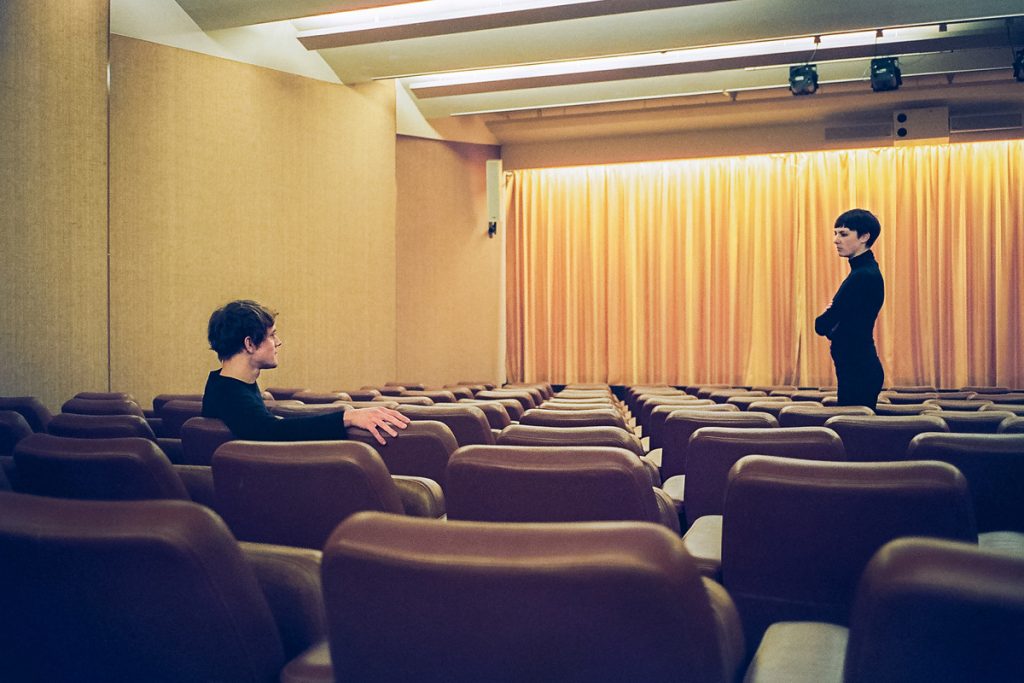
C’est Les Trucs!
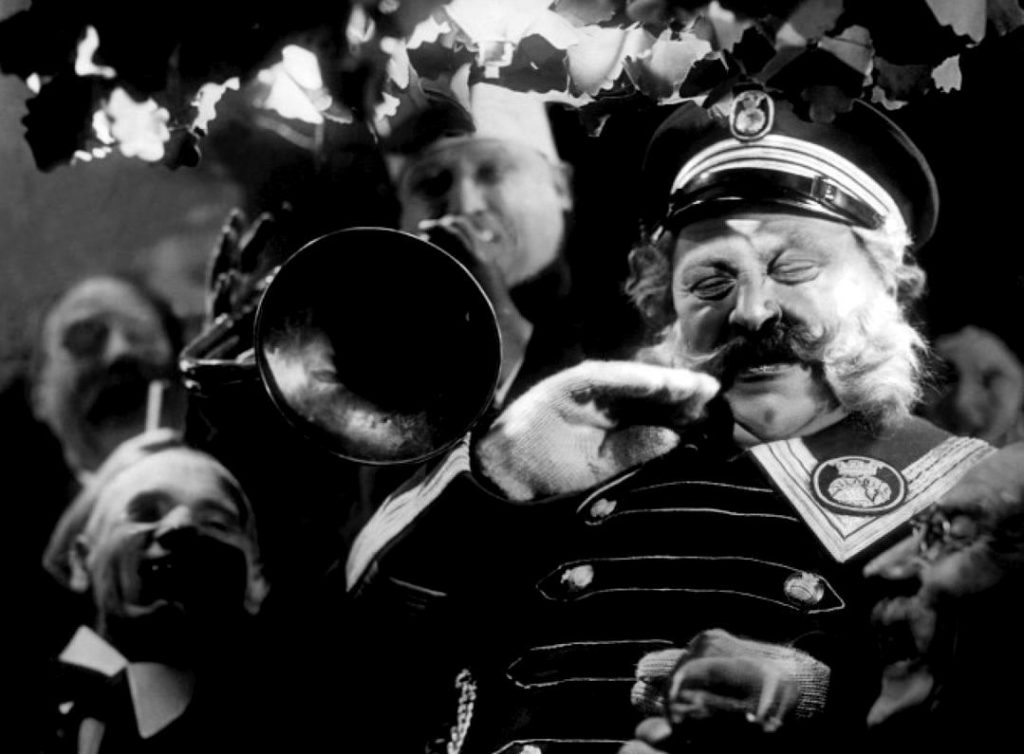
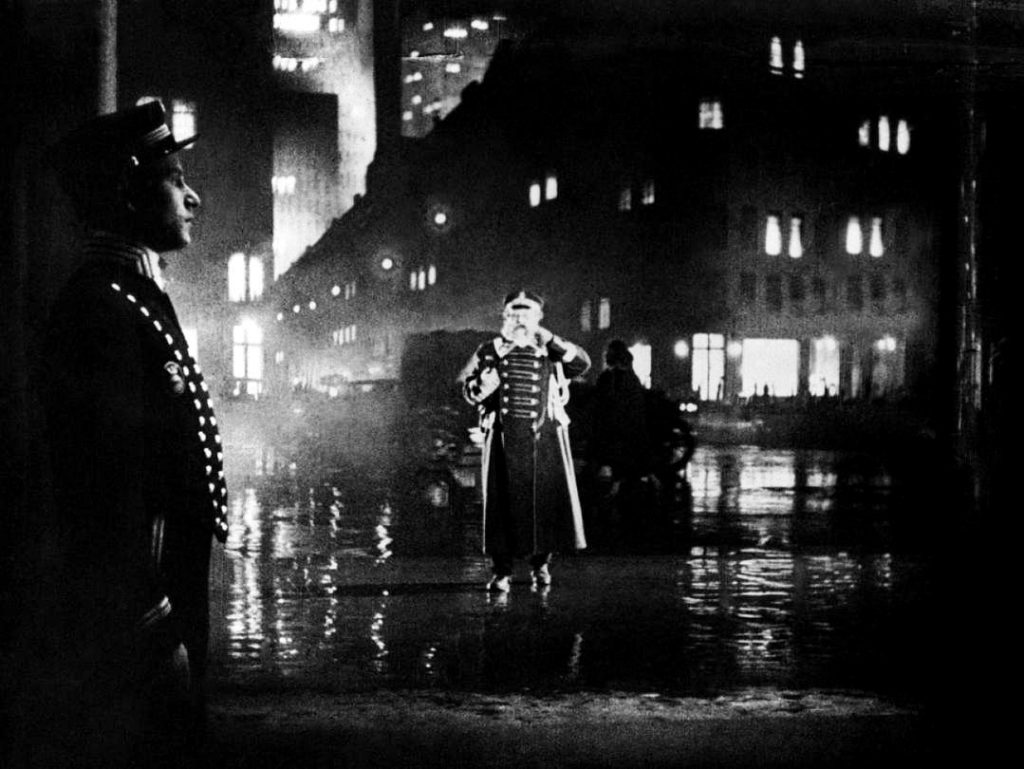
Tonight the dada synth-punk duo from the Knertz Collective will come to GEGENkino festival and present their most recent project—a live score for F. W. Murnau’s classic The Last Laugh – at UT Connewitz.
If you know the band’s music you can guess that this performance will be quite different from your usual pianist-adds-live-score-to-Metropolis-or-whatever events.
Prepare yourselves!
And if you want to spoil the surprise for yourselves, see what tonight’s live score may sound and look like here:
Les Trucs add live score to The Last Laugh
GER 1924, D: Friedrich Wilhelm Murnau, A: Emil Jannings, Maly Delschaft, 90’, silent, BluRay
“Today you are first and best, respected by everyone, a minister, a general, maybe even a prince— do you know what you will be tomorrow?”—with these words Murnau’s Weimar classic The Last Laughopens up and then goes to tell a story of social decline. The main character, played by Emil Jannings, climbs down the career ladder and, formerly a concierge of good standing, he becomes a lavatory attendant. Not only regarding the narrative and acting the film is committed to the expressionist film language prevalent in the 1920s, but also from a technical point of view. For the first time in film history, cinematographer Karl Freund turns loose the “unleashed camera”: from now on, in cinema, not only images and characters are moving, but also the view now wanders through space.
Aided by synthesisers, sequencers and various sounding devices, Charlotte Simon and Zink Tonsur alias LesTrucs will enrich Murnau’s silent film with live sound in the hall of UT Connewitz. Music and performance of this duo are full of a Dadaist spirit. Everyone present will have to accept the fact that what is happening before one’s own eyes and inside one’s own ears cannot even roughly be described. Wonderful it is at least. If Murnau will show his magnificence on screen, it is rather unlikely that LesTrucs will withdraw themselves in their performance in front of the screen.
27 April, 9 pm – UT Connewitz – € 12 / 10 (red.)
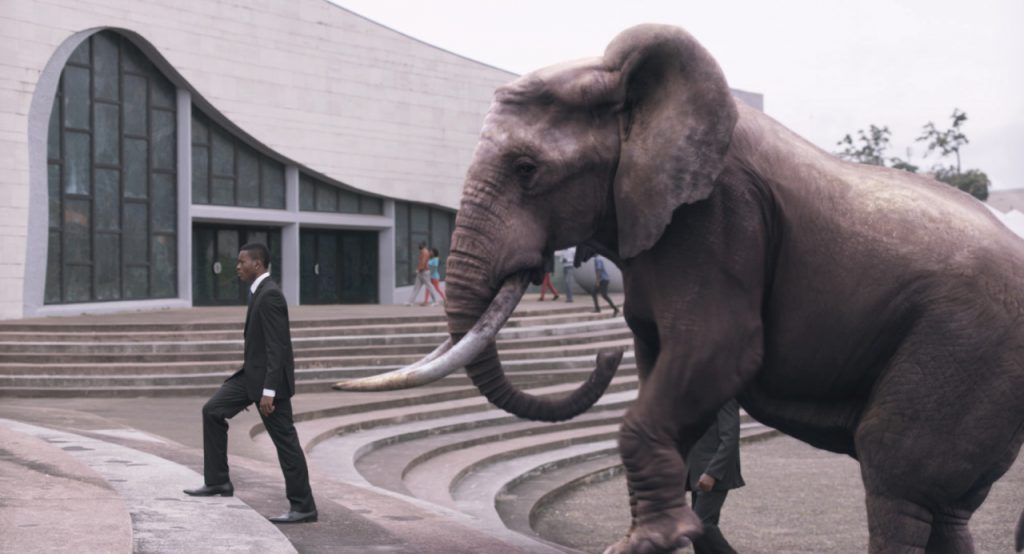
Hence, at this year’s GEGENkino we want to show the great diversity of contemporary African cinema in our section AFRICAN OUTLINES.
Today, 9pm at Luru-Kino we will screen the film »Run« – director Philippe Lacôte’s unique take on the First Ivorian Civil War (2002–2007) – with Djinda Kane, Abdoul Karim Konaté and Isaach de Bankolé the last of which you probably remember from several of Jim Jarmusch’s and Claire Denis’s movies. We’re glad to have Diana Ayeh & Natascha Bing of AG Postkolonial Leipzig coming to the screening in order to give an introduction to the movie and some insights into the historical context and the postcolonial concerns of the film.
Looking forward to seeing you tonight!
Your GEGENkino crew
Run
(CIV/F
2014,
D:
Philippe
Lacôte,
A:
Abdoul
Karim
Konaté,
Isaach
de
Bankolé,
Djinda
Kane,
OV
with
English
subtitles,
102’,
DCP)
Introduction by Diana Ayeh & Natascha Bing (AG Postkolonial Leipzig)
Somnambulistically, a young man walks towards the Prime Minister during church service and kills him, while all the others present are sitting on their places silently and disinterestedly. Afterwards, he escapes—from his pursuers, from himself, from his dreams, and memories. Initially, it remains unclear if this is also a run for freedom. Full of twists and turns like his eponymous protagonist’s escape, Run tells its story in front of the backdrop of the Ivory Coast’s civil war, whom 3,000 people fell victim to during the years 2002 to 2007. Director Philippe Lacôte merges narrative elements of African mythology and nature mysticism with the real context of the crisis. His masterful plot reveals the biography of a freedom fighter who wanted to be a rainmaker at first, then led the life of tramp being assistant to the fair curiosity and professional contest eater Gladys before finally hooking up with the patriotic youth and commencing underground combat.
26 April, 9 pm – Luru-Kino at the Spinnerei – € 6,5/5,5 (red.)
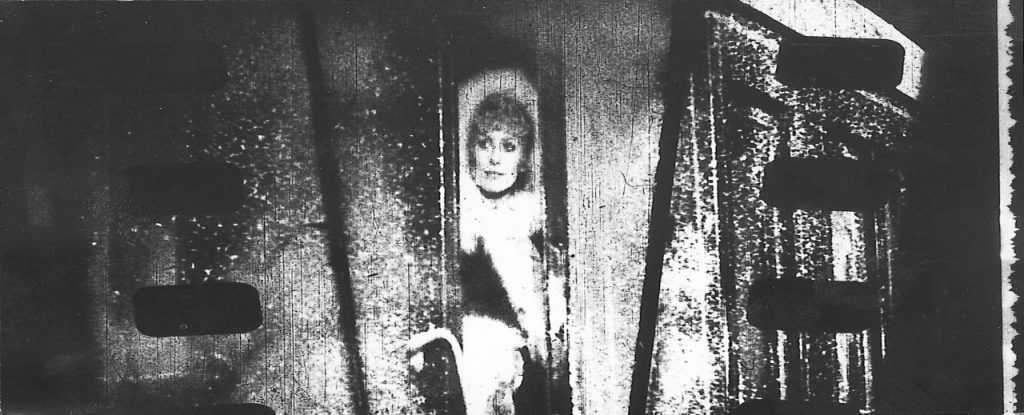
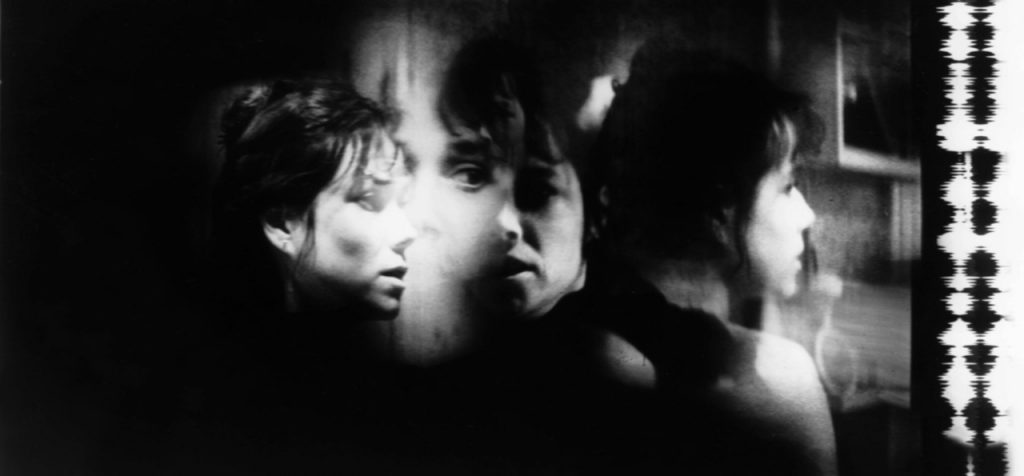
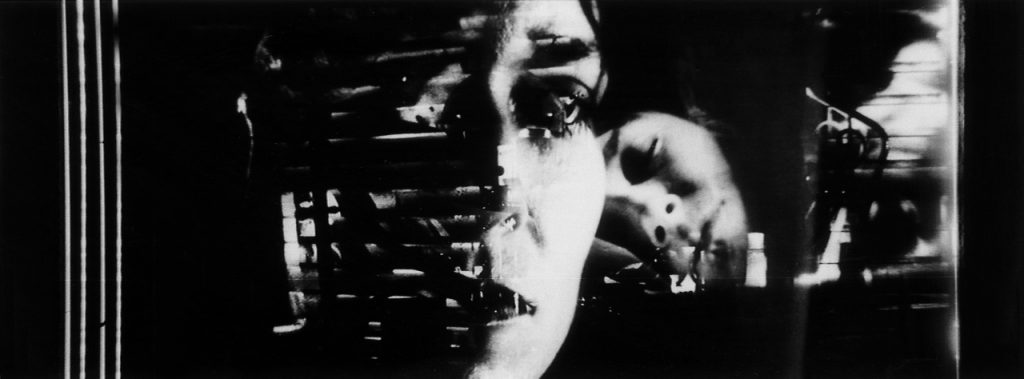
Is there any better format for the cinema? We haven’t found one yet. So, tonight let’s pay tribute to one of the masters of mangling the old analog film. Tonight, 9pm at Luru-Kino we will show a couple of Peter Tscherkassky’s experimental films from the 90s as well as some more recent ones – on 35mm! – that will put to test your audiovisual sensory apparatus.
Here’s some humble words by the man himself:
»In the case of my dark room films I have used 35mm film, most often CinemaScope. In my opinion, as far as the art of moving images is concerned, this is the most powerful tool I can access and use to produce work on a really low-tech-level. And when I say ›low-tech‹, I mean it. You can’t imagine how low my technical level is when I make my films! As a consequence I don’t need a producer, I don’t need a big budget, I don’t need technicians…« [source: digicult.it]
True Tscherkasskyism!
Peter Tscherkassky: raw material and the celebrating of an absolute cinema
Peter Tscherkassky’s films provoke the viewers with the rough changes of light and dark, sound and silence. Being an achieved analogous craftsman, the Austrian experimental filmmaker copies and recycles found footage, for example minor scenes from horror films, into new intriguingly uncanny compositions. In doing so, his internationally highly acclaimed works not only test the limits of film’s raw materiality through audio processing and multiple exposure, but rather attempt, pursue and shift traditional viewing habits and auditory abilities generally. The heart of his works touches on the pivotal understanding of cinema: it’s about the film itself, its materiality plus the codes that determine its cultural present. Tscherkassky draws inherently slumbering ghosts of the future from obsolete, analogue film material. The results frenetically approach something that defies a description and has to be seen—in the cinema hall, accompanied by thickest darkness and fierce sound.
Happy-End (AT 1996, 11’, 35mm)
Cinemascope Trilogie(AT 1997-2001) [L’Arrivée (1997, 3’, 35mm) / Outer Space (1999, 10’, 35mm) / Dream Work (2001, 11’, 35mm)]
Instructions for a Light and Sound Machine (AT 2005, 17’, 35mm)
The Exquisite Corpus (AT 2015, 19’, 35mm)
25 April, 9pm – Luru-Kino at the Spinnerei – € 6,5/5,5 (red.)
»Grenzen scheut das Gegenkino per Definition ohnehin nicht, siehe den Schwerpunkt ›Auschwitz Cinema‹ oder die queeren Filme im Programm…«
Ahem… thanks LVZ… yeah… almost. But there’s more to it than wanting to be transgressive. As a film festival we are also always trying to reflect on the political potential and functioning of the moving image. Therefore, we are glad to have Marcus Stiglegger coming to GEGENkino 2016 tonight in order to present his findings and ideas about the represantation of the Shoah and the horror of concentration camps in cinema and on TV.
24 April, 8 pm – UT Connewitz – € 8/6 (red.)
More information here or at www.utconnewitz.de
NB! The lecture will be held in German. The film though will be shown with English subtitles.
And by the way, we have a press and media archive now on our blog, where you can hear and read about the festival, in case you still don’t know what we’re doing here actually
We will also try to make available an audio recording of Stiglegger’s lecture there, if possible.