Moomins and the Comet Chase (FI 2010, Maria Lindberg)

FI 2010, D: Maria Lindberg, 75’, German version, Blu-ray

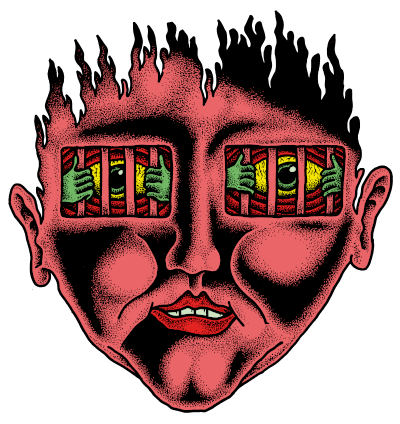
The barometer is falling. Leaves are covered in grey dust. The sky is turning red. The Hattifatteners are the first to leave Moominvalley, more inhabitants follow. This is it, clearly visible: there is a comet in the sky! Moominpappa, Moomintroll and his friends Snufkin and Snif head off to figure out the secret of the flying fireball. They build a raft and ride it to the observatory in the mountains, a place that gives them a better view on the sky. There lives the professor, whose calculations reveal that the comet will hit the earth in four days, four minutes and forty-four seconds. Moomintroll and his friends decide to return to Moominvalley to warn everyone. On their way, they meet Snork and Snorkmaiden and become friends with them. But still, there is this tricky comet…
With tender puppet animations, MOOMINS AND THE COMET CHASE tells an adventure for small and big GEGENchildren, talks of a changing environment and of the courage to take action. Starring Björk’s comet song and lots of surprising incidents.

14 April, 2 pm – UT Connewitz – € 2

Released for children aged 0 or above

Long Day’s Journey into Night (CHN 2018, Bi Gan)

CHN 2018, Director: BI Gan, Monteur: QIN Yanan, Directors of Photography: YAO Hung-I, DONG Jinsong, David CHIZALLET, Actors: TANG Wei, HUANG Jue, SYLVIA Chang L, LEE Hong-Chi, DCP, 140′

LONG DAY’S JOURNEY INTO NIGHT is Chinese director Bi Gan’s second fulllength feature. In the form of a neo-noir film, it tells of a man’s return to his hometown and his quest to find a woman he once loved. He is surrounded by different layers of things past that do not let him go. He passes through areas of back then, pursues traces, finds leads. Still, the approach stays no more than an appealing illusion. Stories and images drift, become more and more dreamlike, mingling with flashbacks of past love’s stylised memories. The present can no longer be detached from the unconscious. As protagonist Luo walks into a dim cinema, things take an unexpected turn. A film starts, he puts on his 3D glasses. He watches a screening of “Long Day’s Journey into Night”. Simultaneously, the audience’s sight switches into the third dimension, too: the last scene is a seventy minute one take. The elegant camera follows Lou underground, on top of a mountain, down a ropeway. Charmingly, we lift off with him and land in surreal surroundings. There, we follow movements through alleys and houses to end up in a spinning room.

14 April, 9:30 pm – Luru Kino at the Spinnerei – € 7,5 (6,5 red.)


Trailer

Working on the image | Insights into the work of Hartmut Bitomsky

Every film, as well as every photograph, is an imprint of light (therefore photos and graphein) of what was located in front of the lens at the moment of light’s intake onto the camera’s negative material. At the same time, they picture the gaze on it: the manner of perceiving what was located in front of the camera. The shots derive from the visible things, and they derive from images that render things visible.These are two different things.“ – from: Verlorene Form, 2008

Hartmut Bitomsky (*1942 in Bremen) has realised a wide variety of mostly essayistic documentary films over the course of more than forty years. From 1972 to 1984, he was a member of distinguished film magazine Filmkritik’s editorial team and cooperative. He published several theoretical works on film, such as “Die Röte des Rots des Technicolor” (1972) and “Kinowahrheit“ (2003), and lectured at the School of Film and Video at California Institutes of the Arts. Ultimately, he was head of Berlin film academy dffb from 2006 to 2009. Still, he remains scarcely known to a broader audience.

Following the early works from his film studies, where Brecht’s sense of didactic play and Marxian theory are influences, the documentary contributions of the 70s primarily reflect on film-historical and film-aesthetic topics, covering for example early cinema or the work of John Ford. Simultaneously, he writes first texts for Filmkritik. From this point on, written text and filmed material are mutually dependent and become a meaningful complex over the next decades.

In our insight, we focus on Bitomsky’s films of the1980s, which were partly co-produced by the WDR (West German Broadcasting Corporation). They are exemplary for Bitomsky’s critically analytical reflections on images deriving from wide-spread sources of (cinematic) history. Documentary form and feature film are equally intriguing to him, as both dramatise and guide their subject matters. Key issue of the skeptical dialogue with them is the placing of things inside the frame and the viewpoints and ideas constituted by that, moreover whether these image production come closer towards the truth or rather conceal it.I believe a documentary should not expose reality, it must articulate reality, structure it.” This reflection paradigmatically signifies a method which, by arranging found material, surveys and remeasures the visible, at times making things visible, yet without ignoring the material’s intrinsic aesthetic value. New slants are indicated by montage and a trenchant, frequently soberly laconic, voice-over.

The first day of the show is dedicated to essayistic compilations of archive films, screening DEUTSCHLANDBILDER (FRG 1984) and REICHSAUTOBAHN (FRG 1986). National Socialist aesthetic, particularly in the genre of documentary „cultural film“, has to undergo a form of pictorial clarification. Combining these two film illustrates how Bitomsky’s work is shaped by reflections and cross referencies. Film scholar and cultural film expert Ramón Reichert will give an introduction, in which he will pursue Bitomsky’s method of processing archival footage artistically and relate it to other approaches of this kind.

The following theme day compiles two works, DAS KINO UND DER WIND UND DIE PHOTOGRAPHIE (GER 1991) and DAS KINO UND DER TOD (FRG 1988), which primarily revolve around the reflexion on film- and cinematic history and doing so, deal with narrative and medial peculiarities, such as the relations between feature film and the death motif and between documentary film and reality. Simultaneously, they showcase Bitomsky’s process of working and thinking by having him stage himself engaged in dialogue with the works he is referring to. Frederik Lang, film scholar and freelance author, will talk about the context of Filmkritik and Bitomsky’s film critique and film analysis using cinematography. A screening of Filmkritik’s joint project BRESSON’S “L’ARGENT” (FRG 1983) completes the evening.

Mon, 15.4
UT Connewitz
7 PMIntroduction by Ramón Reichert
Deutschlandbilder
BRD 1982/83, D: Hartmut Bitomsky, Heiner Mühlenbrock, Dok, 60’, dOV, 35mm
9 PMReichsautobahn
BRD 1984-86, D: Hartmut Bitomsky, Dok, 91’, OmeU, 35mm
Wed, 17.4
Luru Kino
18 UhrLudwig Harig | A Flower Piece
Composition: Wolfgang Wölfer • Director: Hans Bernd Müller • with Günther Sauer, Joachim Nottke, Charles Wirths • Ensemble: Zürcher Kammersprechchor and the Kinderfunkensemble Christa Frischkorn • Produktion: SR/HR/SDR/SWF 1968 • 53’
7 PMIntroduction by Frederik Lang
Bresson’s “L’Argent”
BRD 1983, D: Hartmut Bitomsky, Manfred Blank, Harun Farocki, 30’, dOV, File
Cinema and Death
BRD 1988, D: Hartmut Bitomsky, 46’, dOV, Betacam SP
9 PMCinema and wind and Photography
D 1991, D: Hartmut Bitomsky, 56’, dOV, DigiBeta
Spare Time
UK 1939, D: Humphrey Jennings, 15’, englische OV, 16mm

Deutschlandbilder (BRD 1982/83, Hartmut Bitomsky, Heiner Mühlenbrock)

FRG 1982/83, D: Hartmut Bitomsky, Heiner Mühlenbrock, Doc, 60′, German version, 35mm

It starts as a montage of black and white scenes presenting all kinds of sportive activities, formal attractions and everyday cheerfulness. Among them are also images of a swastika-confetti shower and first uniforms; a flood of “Deutschlandbilder”. Subsequently, a tracking shot along spread film photos, the voice over soberly assesses: “The Nazis wanted to put a complexion on Germany that pleased them. They were decidedly drawn to aesthetic beauty. They appreciated films that depicted German culture – cultural films.“ These cultural films are concerned in this essayistic compilation film made of archival footage.

The construction principle seems simple: chronological panels mark the time of origin of the commented-on Nazi cultural film extracts from 1933 to 1945; occasionally interlaced are scenes that are staged divergently, showing photographic reproductions being flicked through or paced off by the camera, accompanied by a voice over. However, the question essentially driving the film is a complicated one that cannot be resolved conclusively: What do these images tell us today, and how are we to talk about about them in the present? There has been no iconoclasm: they are accessible, commonly used to prove how fascism was like, but they themselves are an immense pseudo-production. Pseudo-realities concealing more than they show. Yet they expose something. In the end, it is said: “An image is the mask of the other.“

With an introduction by Ramón Reichert (in German)

[Working on the image | Insights into the work of Hartmut Bitomsky]

15 April, 7 pm – Luru Kino at the Spinnerei – € 6,5 (5,5 red.)

Reichsautobahn (BRD 1984-86, Hartmut Bitomsky)

FRG 1984-86, D: Hartmut Bitomsky, Doc, 91′, OV with English subtitles, 35mm

Already prior to 1933, the road- and automobile industry projected a German motorway. Only Hitler and his Inspector General for German road sector made them into a propagated showpiece. But what they created first and foremost, is its calculated aesthetics. Contemplation outshone its actual function. The autobahn was achieved through exploitative working conditions and was subsequently scarcely used. By no means, it can be regarded as a successful job creation scheme, neither did it serve as a strategic “military road“ at the beginning of the war. Nevertheless, countless films, photographs, poems, postcards, paintings and novels accompanying it never grow tired of praising it: “Books and images were the autobahn’s facade. Most of it is self-praise or reassurance. The autobahn is useful, and it is beautiful. It is proven to one what actually should have been evident. One senses the burden of the evidence.“

Repetetively, the enthusiastic worker is put into the frame, the individual bows to the big picture. It is emphasised how a modern street is in conformity with pastoral nature. An enourmous number of such produced Nazi-images is rescued from archives and compiled. Hartmut Bitomsky’s voice-over seeks to demythologise those images. Formally undogmatic on the one hand, REICHSAUTOBAHN classically gets contemporary witnesses and experts a chance to speak on the other.

[Working on the image | Insights into the work of Hartmut Bitomsky]

15 April, 9 pm – Luru Kino at the Spinnerei – € 6,5 (5,5 red.)