
HK 1999, D: Johnnie To, C: Anthony Wong, Francis Ng, Jackie Lui Chung-Yin, 81’, Orig. with Eng. subs, 35mm

Brother Lung’s life is sought for, so five members of his organization are going to serve as his bodyguards: Roy and his right hand Shin, weapons expert James, Mike the pistol hero and cold-blooded murderer Curtis. Without revealing much of themselves, they quickly form a team with a mission. Staged in a condensed manner, we observe this gang of men as they sparingly reveal their individual character. Johnnie To stages how a peculiar partnership develops out of the slightest physical actions and the smallest emotional impulses, always accompanied by standoffs and shootouts packed with suspense. In the end, chumminess is opposed by loyalty to the organization. A genre film between kinetic actions and moments of silence.
| Fri 03 Sept | Luru Open-Air |
| 10 pm | regular: 6,5€ / reduced 5,5€ double feature: 11€ / reduced 9€ |
HK 2014, D: Fruit Chan, C: Wong Yau-Nam, Janice Man, Chui Tien-You, 124’, Orig. with Eng. subs, DCP
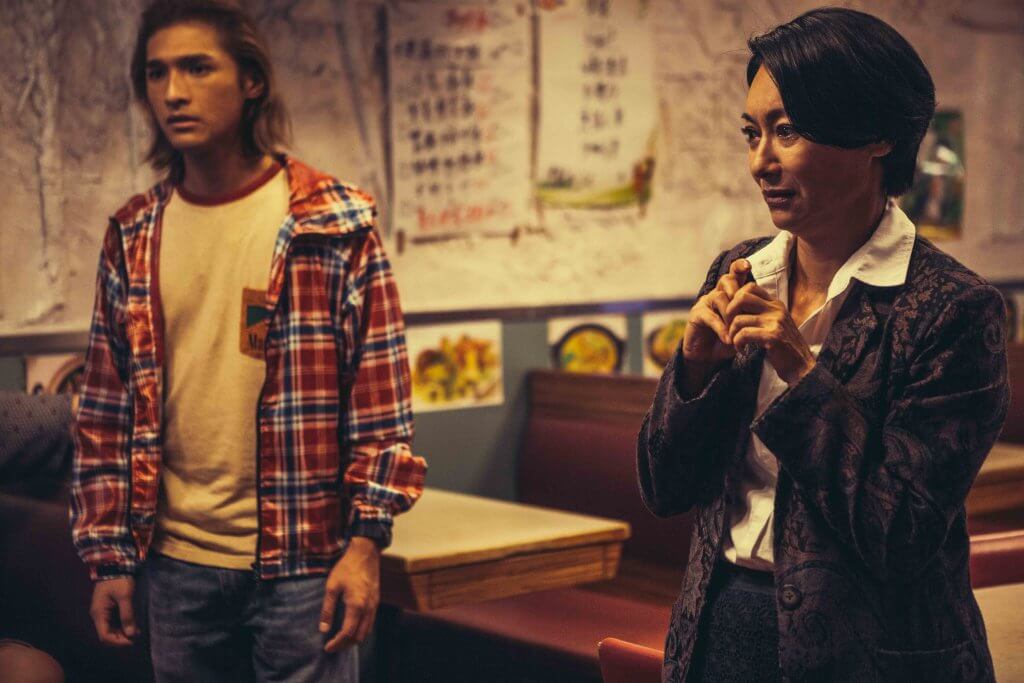

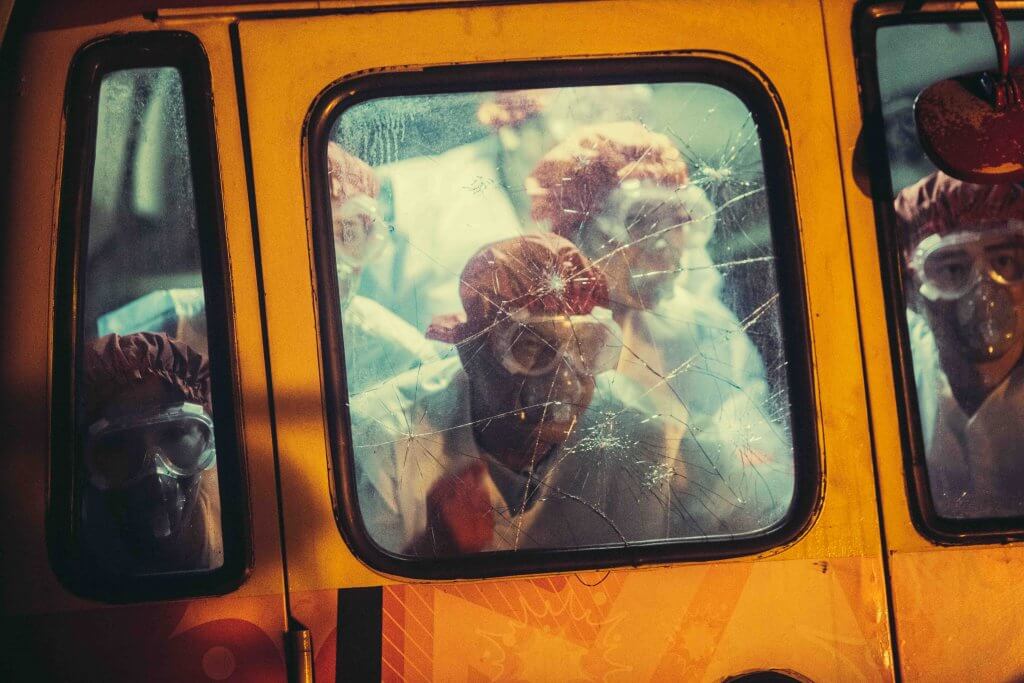
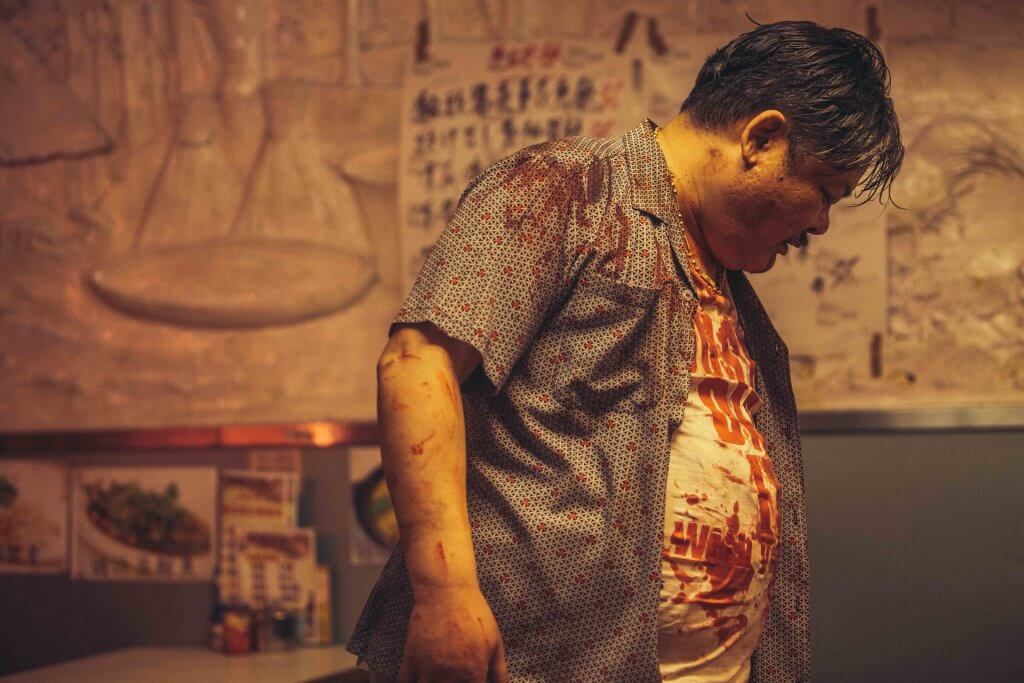
A red public bus is winding its way through the urban chaos of Hong Kong. Gradually, it fills up with different characters. When the bus rides through Lion Rock tunnel, something inexplicable happens: Streets and whole city districts are empty, everything up to the passengers seems to have vanished. To make matters worse, they are haunted by strange phenomena defying human logic – resulting in seeking refuge in hallucinatory fantasies and conspiracy theories. With MIDNIGHT AFTER, Fruit Chan tells of the dissolution of an established order. What remains are disorientation and a pessimistic view into the unknown.
| Fri 03 Sept | Luru Kino |
| 7 pm | With an introduction by Clemens von Haselberg regular: 6,5€ / reduced 5,5€ double feature: 11€ / reduced 9€ |
GER 1920, D: Paul Wegener, Carl Boese, A: Paul Wegener, Albert Steinrück, Lyda Salmonova, Ernst Deutsch, 76′, tinted, DCP 4K
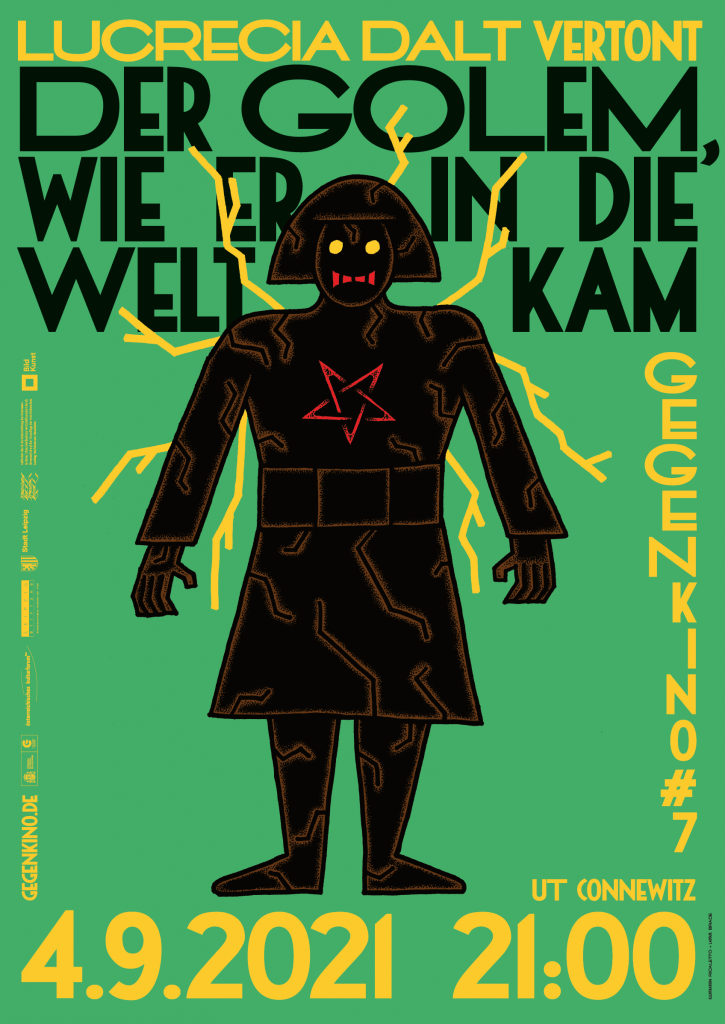
Tickets (€ 12) available via: https://www.tixforgigs.com/Event/38121)
Live scoring THE GOLEM by Paul Wegener and Carl Boese from 1920, the expressionist classic of Weimar cinema, appears fairly hidden. The story of Rabbi Löw who creates the clay figure Golem to avert the imminent expulsion of inhabitants of the Jewish ghetto of Prague in the 16th century. Out of a linkage of unfortunate circumstances, the figure subsequently opposes its creator. The film’s buildings, designed by Hans Poelzig, were leading the way for further set designs to come – until today, THE GOLEM is considered as a prototype for the horror genre. Everywhere, there are thronging phantasmagorias, nightmares of a world whose human faces have become grimaces, whose streets have got steep mountain paths, whose dwellings are warped and in danger of collapsing.
Similar to the magic the clay is being vitalised with turning it into a golem, Colombian sound artist and former geotechnical engineer Lucrecia Dalt will energise new abysses inside the images with her deep bass frequencies. Dalt is an internationally booked and acclaimed musician and performer. She moves freely between academic or museum settings and club contexts. In her subtle soundscapes, she subverts overly rigid ideas of form, experiments with South American rhythms, looped drone sounds and unique spoken word passages. She has transferred a geological framework to her musical approach: she compares her songwriting to ground and rock layers, which have deposited on earth’s surface as one large mass and yet are composited of single elements with individual characteristics. What emerges tonally is an unprecedented, surrealistically accumulated terrain.
| 4 September | UT Connewitz |
| 9 pm | € 12 [Tickets available via: TixforGigs] |
FR 1979, D: Paul Grimault, 81’, German version, 35mm, age: 6+


In his huge castle, a tyrant king is content with praising himself and particularly with making life hard for his animal subjects. But a talking bird with a magnificent plumage and a top hat does not want to endure all of this any longer. This is the basic constellation of the fairy tale adaptation after Hans Christian Andersen, an animated film from France bursting with fantasy. Long-since a children’s film classic there, it has yet to be discovered over here by young and old alike! That is rather astonishing, as it has quite a few parallels to the most beautiful films of Studio Ghibli.
| Sun 05 Sept | UT Connewitz |
| 2 pm | 2€ |
SU/Moldavia 1993, D: Artur Aristakisyan, Doc, 140’, Orig. with German subs, 35mm
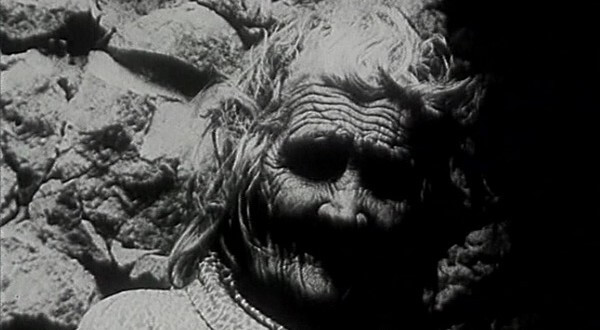
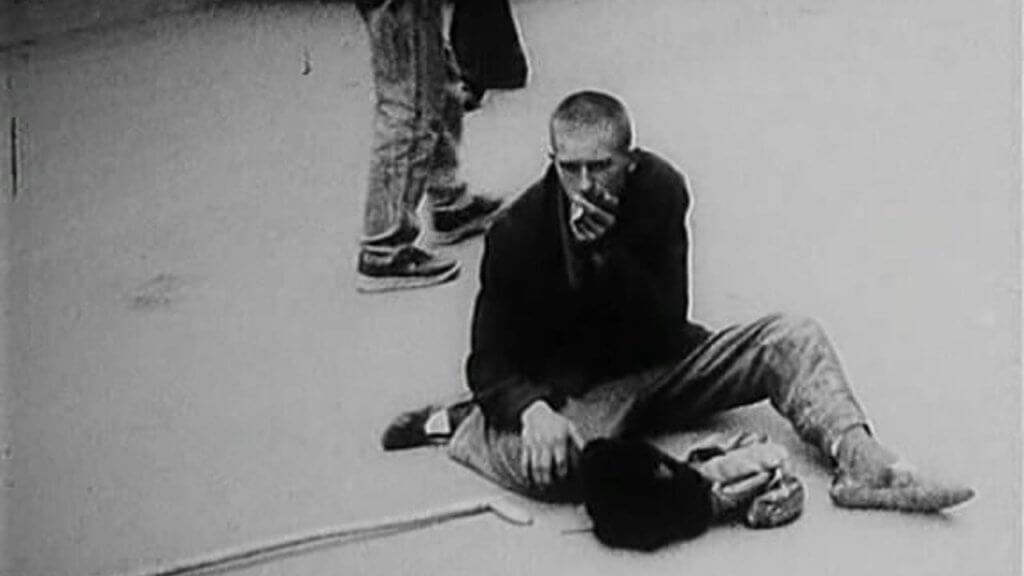
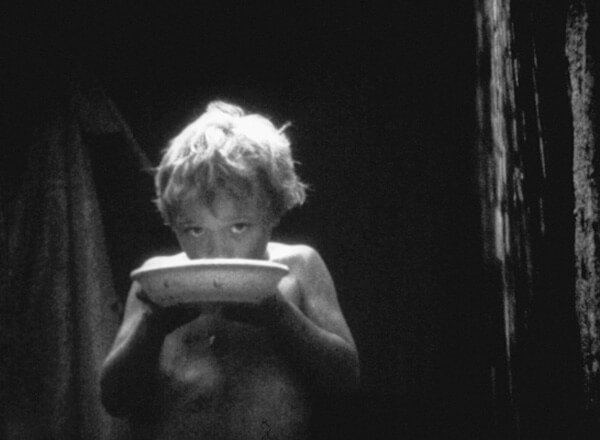
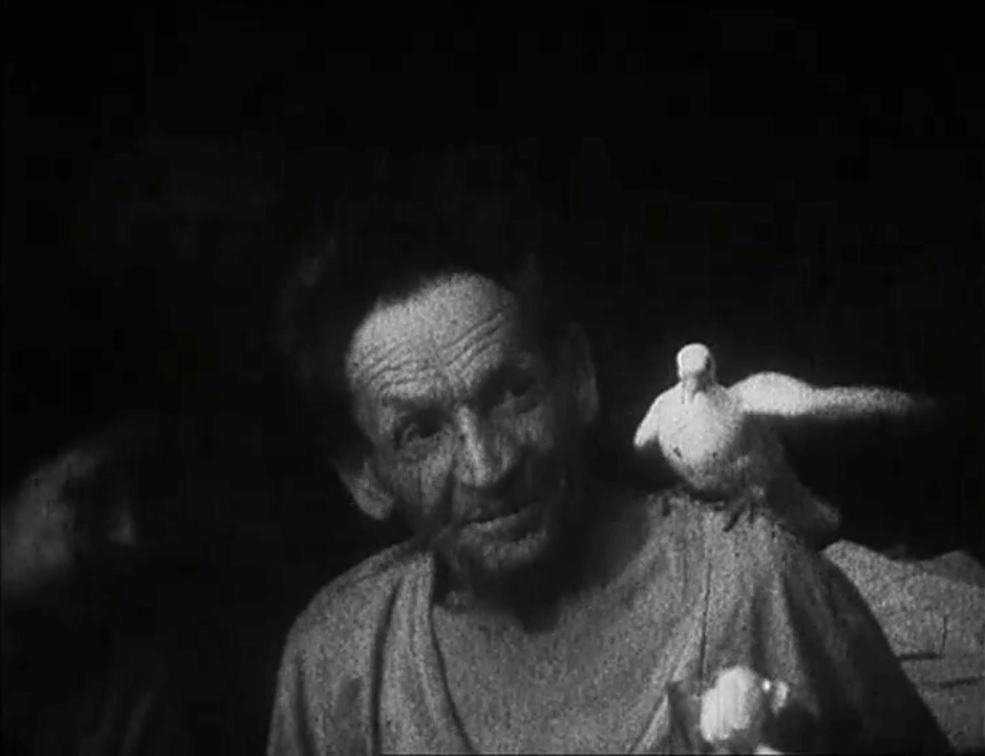
Armenian filmmaker Artur Aristakisyan shot his film essay about homeless people in Chisinau (Moldavia) already in 1990, but it premiered in 1993 as his graduation film from the Moscow All-Russian State Institute of Cinematography. In this lesser-known cinematic masterpiece, the narrator speaks to his unborn son hoping to save him from the system. Ironically, the only way out suggested by the narrator is by becoming an outcast. The images of the film, all 16 mm hand camera shots, sketch the life-stories of ten beggars. They are turned into ten poetic parables about positive and negative liberty (Isaiah Berlin) of the individual.
| Sun 05 Sept | UT Connewitz |
| 7 pm | With an introduction by Elina Reitere regular: 6,5€ / reduced 5,5€ |